Puglia Coastal Road Trip: Ultimate Guide to Bari, Polignano & Monopoli
Puglia is a vast and incredibly diverse region, which is why I’ve decided to split my ultimate guide into several articles, each focusing on different towns and experiences. In this first installment of your Puglia Coastal road trip adventure, we’re diving deep into its stunning Adriatic coast, specifically covering the vibrant cities of Bari, Polignano a Mare and Monopoli.
Driving Puglia’s Adriatic coast from Bari to Monopoli ranks among Italy’s most rewarding coastal road trips. This stunning stretch combines the authentic urban energy of Bari with the cliff-perched beauty of Polignano a Mare and the working-port charm of Monopoli – all connected by one of the Mediterranean’s most scenic coastal drives.
Having explored this route extensively by car, I can tell you it’s perfect for road trippers who want flexibility to discover hidden beaches, arrive at restaurants without schedule constraints and explore at their own pace. Here’s everything you need to know for your own Pugliese coastal adventure.
Why Puglia is Perfect for Car Travelers
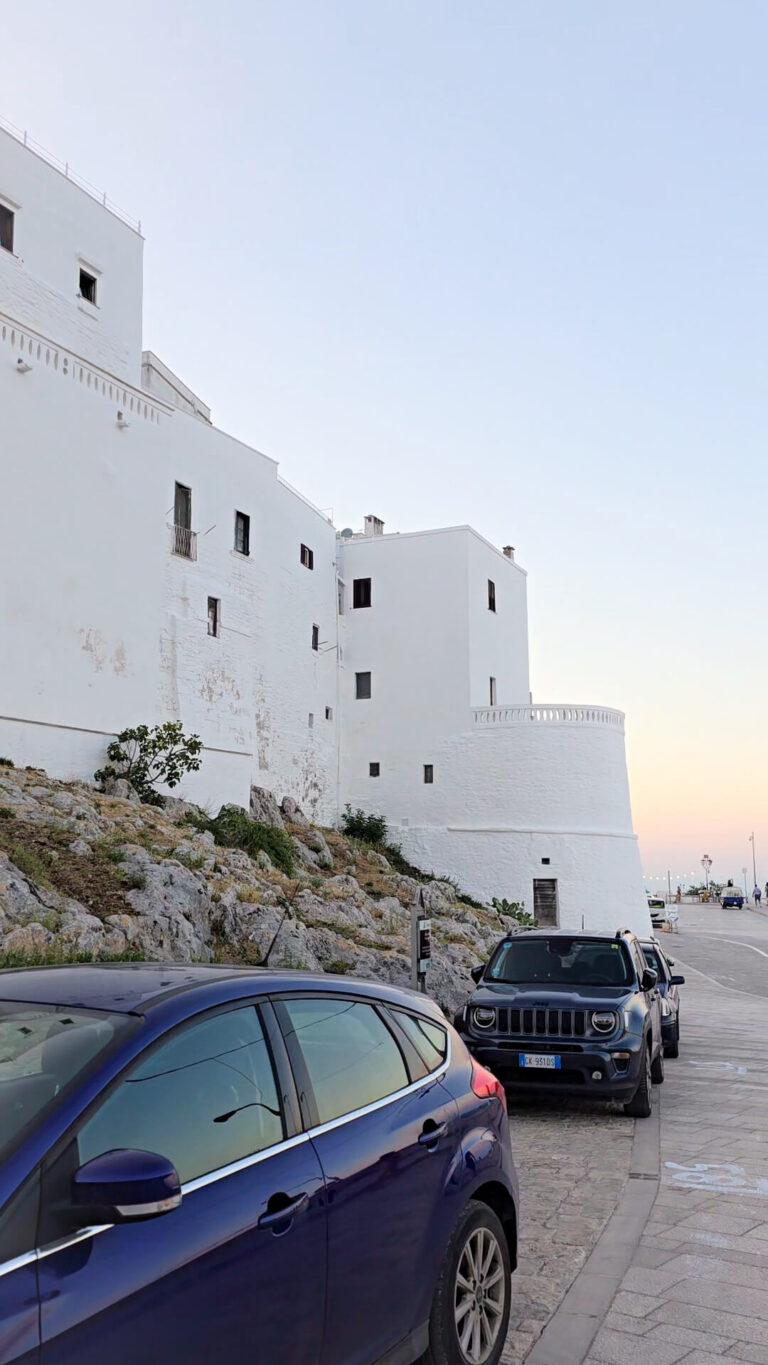
Here’s the thing though – Puglia practically demands that you have a car. Public transport exists, sure, but it’s limited and frankly, you’d miss the real magic:
- Hidden coves accessible only by winding coastal roads.
- Countryside masserie where time seems to have stopped.
- Spontaneous stops at roadside stands selling the sweetest cherries you’ve ever tasted.
I learned this the hard way after comparing dozens of rental options. Now, for the best deals on car rentals in Puglia, I always check AutoEurope.eu first – they consistently offered the best prices and comprehensive insurance options that gave me peace of mind on those winding coastal roads. Pro tip: Book early for the best selection, especially if you want a smaller car that’s easier to navigate through historic centers.
How to Visit Puglia by Car
Getting Your Rental Car at Bari Airport
Starting your road trip right at Bari Karol Wojtyła Airport (BRI) makes perfect sense. The rental desks are conveniently located in arrivals, and you’ll be on the road within 30 minutes of landing.
Pro tip for road trippers
Book an automatic transmission well in advance if you prefer it – they’re limited in Italy. Also, request a GPS or ensure your phone plan covers data, as navigating Puglia’s old towns can be tricky without proper directions. The SS16 coastal road begins practically at the airport’s exit, immediately setting the scenic tone for your journey ahead.
Best Time to Visit Puglia
Timing made a huge difference in my experience. I visited in late May and early June, which turned out to be perfect – warm enough for swimming, long days for exploring, but not yet crowded or oppressively hot. September and October offer similar conditions with the bonus of harvest season and food festivals.
July and August bring intense heat and crowds, but also vibrant nightlife and beach culture that’s worth experiencing if you can handle the intensity. The shoulder seasons from November through April offer mild weather and fewer crowds, though some restaurants and hotels close.
Your Coastal Itinerary: Bari, Polignano a Mare & Monopoli
This guide is designed to help you navigate Puglia’s highlights, offering a logical flow for a road trip focused on the Adriatic coast. Remember, this is your adventure, so feel free to linger longer in places that call to you!
Bari – Your Urban Base Camp
Bari, bustling capital, serves as an ideal urban base camp for kicking off your Puglia coastal road trip. Far more than just an airport city, Bari offers a captivating blend of ancient traditions and modern energy, providing a vibrant introduction to the region’s authentic rhythm. Its strategic location makes it perfect for both deep dives into city life and launching day trips down the Adriatic.
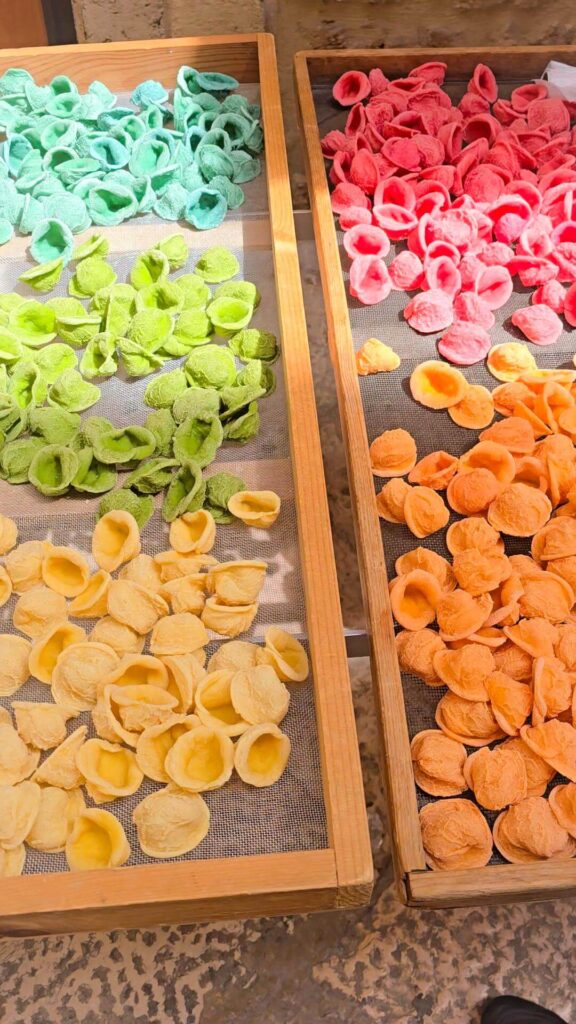
Stepping into Bari Vecchia, the old town, felt like entering a living museum. I was immediately struck by the narrow, winding alleys, where laundry lines crisscrossed between ancient buildings and the comforting scent of fresh orecchiette pasta filled the air. It’s a place where centuries-old traditions are still part of daily life.
Beyond the charming chaos of the old town, Bari also boasts a more modern, elegant side, with wide boulevards and sophisticated shops. This contrast makes it a dynamic city to explore, offering everything from ancient history to contemporary culture, all within easy reach for the start of your coastal adventure.
Where to Stay in Bari
For road trippers, finding accommodation with convenient parking and easy access to both the historic center and major roads is key. I’ve found that the Murat district offers the best balance. Consider the Hotel Excelsior, which provides secure on-site parking and is just a short walk from Bari Vecchia. Another excellent option is Mövenpick Hotel Bari, known for its central location, comfortable amenities and dedicated parking facilities, making it easy to explore the city on foot and embark on day trips.
Where to Park in Bari
Not staying in Bari? No problem. Never attempt to drive into Bari Vecchia (the old town). Those narrow medieval streets barely accommodate a Fiat 500, and you’ll end up reversing out while locals laugh. If you’re just popping into Bari for a few hours and need a safe, convenient spot close to the old town, this is my go-to recommendation: Parcheggio Garage Ceglie. It’s only a 5-10 minute walk to the main attractions, making it incredibly easy to explore on foot. But also, Blue zones (paid parking) throughout the modern center cost €1-1.50 per hour and work well for shorter stops. Always carry coins – many meters don’t accept cards and parking attendants don’t give change.

Road Trip Essentials in Bari
Before heading out to explore the coast, stock up on road trip necessities. Bari’s morning markets are perfect for assembling picnic supplies – fresh focaccia barese from local bakeries, local cheeses and seasonal fruits that make perfect beach snacks. The city also has excellent coffee culture that’ll fuel your driving days. Stop at any local bar for proper Italian coffee and cornetti (people say never order cappuccino after 11 AM – I did and I survived).
Exploring Bari: A Complete Cultural Experience
Bari deserves more than just a logistics stop – it’s one of Southern Italy’s most authentic cities, where ancient traditions blend seamlessly with modern urban energy.
- Bari Vecchia (Old Town): A Living Medieval Maze The historic heart of Bari feels like stepping back in time. Start your exploration early morning on Via Arco Basso, where elderly women continue the centuries-old tradition of hand-making orecchiette pasta outside their homes. This isn’t performed for tourists – it’s real daily life that’s continued unchanged for generations. In this street I found Italian grandpa selling sun-dried tomatoes. That was the best souvenir I’ve bought for my friends on this Puglia coastal road trip. Navigate the labyrinthine streets to discover hidden piazzas where children play soccer against ancient walls while grandmothers gossip from their doorsteps. The old town can feel confusing, but getting lost is part of the charm – every wrong turn reveals architectural gems or local scenes worth savoring.
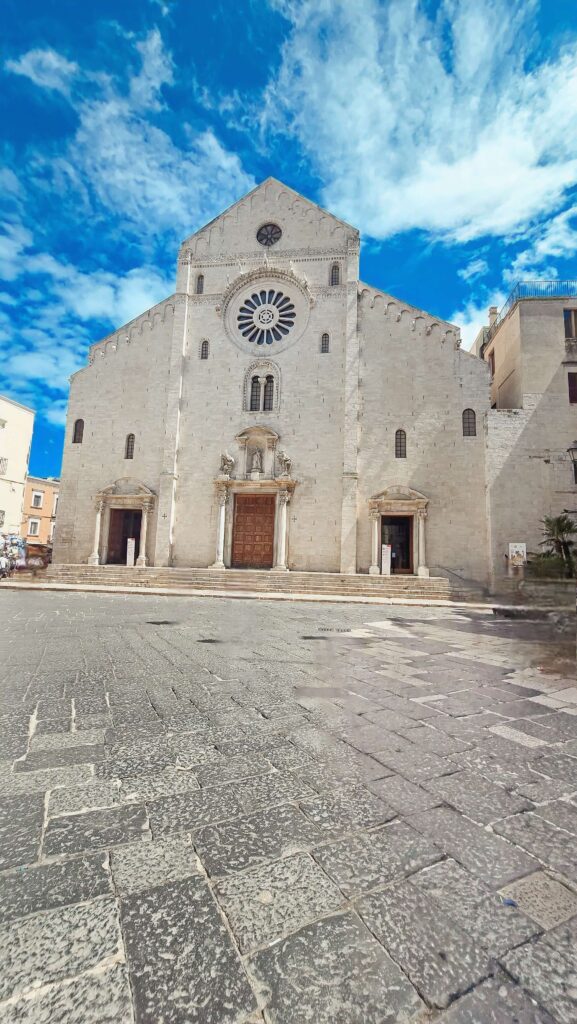
- Religious and Historical Treasures: The Basilica di San Nicola stands as Bari’s spiritual centerpiece, housing the relics of Saint Nicholas (the inspiration for Santa Claus). Built in 1087, this Norman masterpiece features stunning Romanesque architecture with a facade that’s deceptively simple compared to the ornate interior. Don’t miss the crypt where pilgrims from Orthodox countries come to venerate the saint’s tomb. Just steps away, the Cattedrale di San Sabino offers a completely different experience. Climb to the upper levels for breathtaking views over the old town’s terracotta rooftops, and admire one of Puglia’s most beautiful rose windows. The cathedral’s clean lines and soaring spaces provide a peaceful contrast to the bustling streets outside. The Castello Normanno-Svevo dominates the old town’s eastern edge. This 12th-century fortress now houses rotating art exhibitions and offers panoramic views from its ramparts. The castle’s story spans centuries of conquest – Norman, Swabian, and Angevin rulers all left their architectural marks.
- Modern Bari’s Cultural Scene Beyond the old town, Bari’s Murat district showcases 19th-century urban planning at its finest. The Teatro Petruzzelli, rebuilt after a devastating fire, hosts world-class opera and concerts. Even if you don’t attend a performance, the building itself merits admiration. The Pinacoteca Metropolitana houses an impressive collection of Pugliese art spanning medieval to contemporary periods. The museum building, designed by contemporary architects, creates striking dialogue between ancient artworks and modern spaces.
Here are my favourite guided tours in Bari, check them.
- Unique Free Bari Experiences
- Take the Lungomare evening walk – this 3-kilometer seafront promenade becomes Bari’s social center after sunset. Locals gather for aperitivo, children ride bikes, and couples stroll while the Adriatic provides a constant soundtrack.
- Visit the Mercato del Pesce (fish market) early morning to watch the daily catch arrive and witness animated negotiations between fishermen and restaurant owners. The energy is infectious, and nearby bars serve perfect espresso to fuel your exploration.
- For a uniquely Barese experience, join the evening passeggiata along Via Sparano, the main shopping street where locals dress up for their traditional evening stroll and window shopping.
Pros and Cons of Staying in Bari:
- Pros: Excellent gateway city with easy airport access, a vibrant and authentic old town, a lively modern center with great shopping and dining and a convenient base for day trips along the coast and inland.
- Cons: Driving and parking directly in the old town is impossible (requires parking outside and walking), can feel more bustling and less “quaint” than smaller Puglian towns.
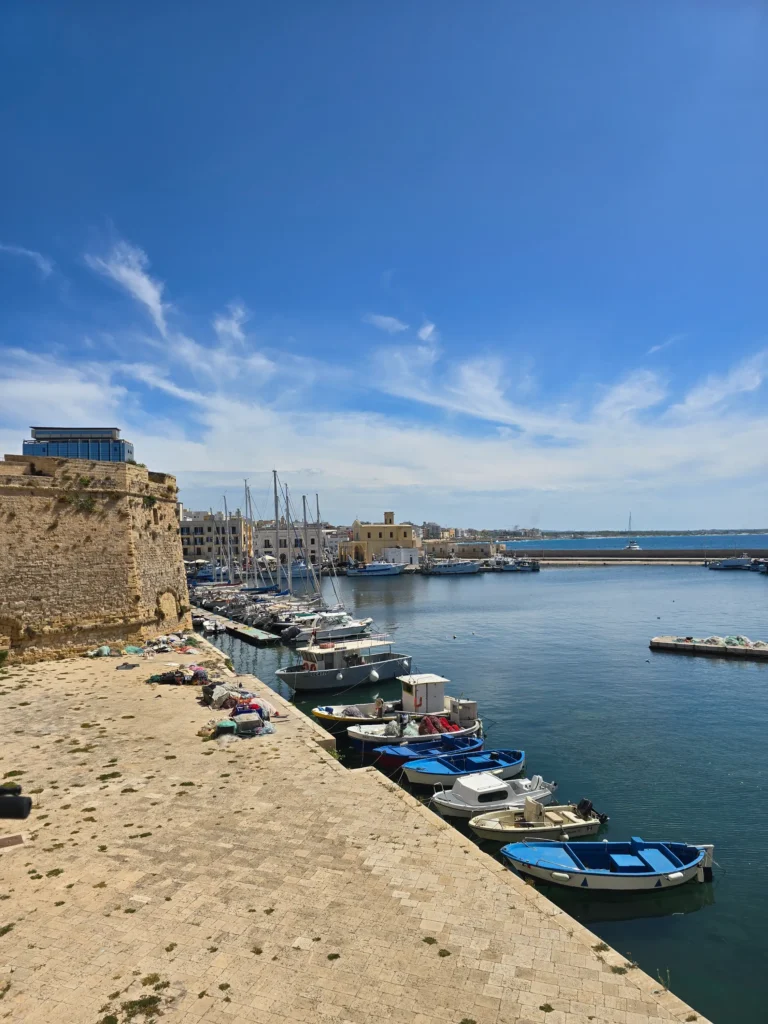
Gallipoli is one of the highlights of the Salento coast, especially if you’re looking for beautiful beaches, a historic old town, and easy day trips by car.
If you plan to stop here, I’ve written a complete Gallipoli Puglia travel guide covering beaches, parking tips, sunset bars, and day trips.
The Coastal Drive: Bari to Polignano a Mare
This 35-kilometer stretch ranks among Italy’s most beautiful coastal drives. The road hugs the Adriatic shoreline, offering constant sea views to your right while ancient olive groves stretch inland. Multiple scenic pullouts let you stop for photos without blocking traffic.
The SS16 Experience: Driving conditions are generally excellent with clear pavement and lane markings. Summer traffic can slow things down, especially on weekends but the scenery makes any delays enjoyable. Speed cameras are frequent – stick to posted limits. Timing tip: Early morning drives (before 9 AM) offer the best light for photography and emptier roads for easy stopping at viewpoints.
Hidden Stops Along the Route: About halfway to Polignano, watch for signs to Torre a Mare – a small fishing village worth a 10-minute detour. The harbor area has excellent seafood restaurants and provides a preview of the coastal charm ahead. Several unnamed beach access points along the route offer chances to swim away from crowds. Look for small parking areas near the road – they usually lead to secluded coves perfect for a refreshing dip.
Polignano a Mare: The Cliff-Top Wonder
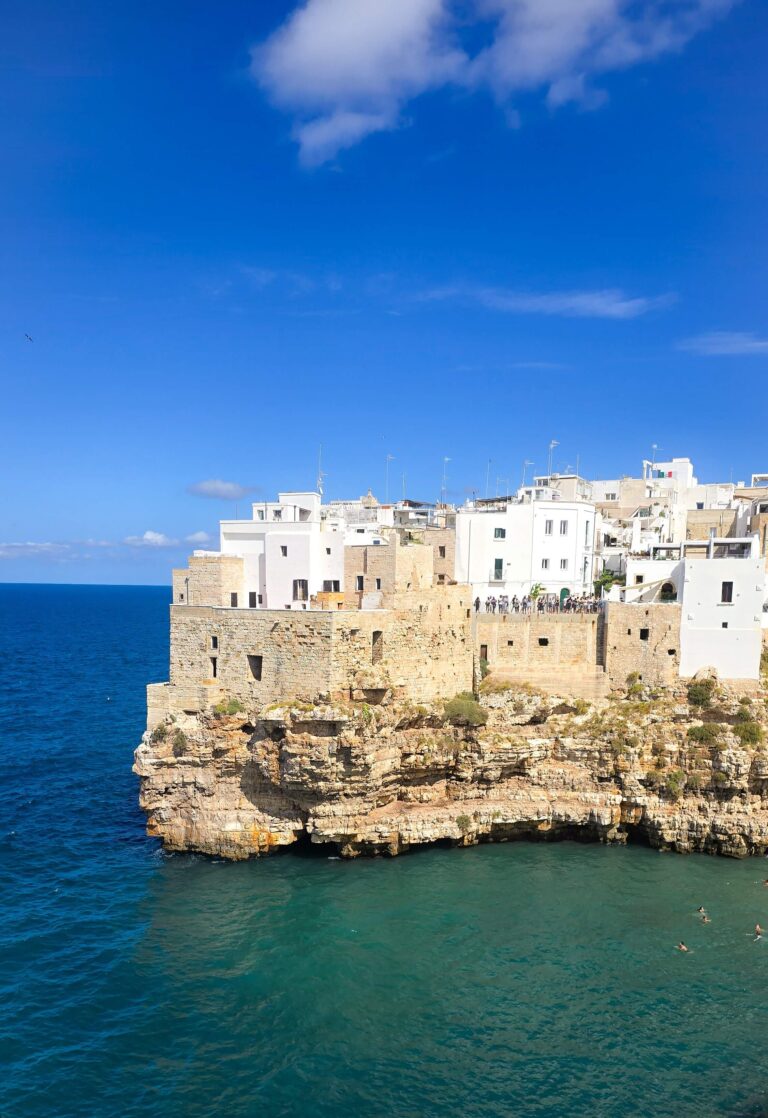
Approaching Polignano a Mare, the landscape transforms and suddenly, the iconic white town appears, perched dramatically atop towering limestone cliffs. This wasn’t just another stop on my Puglia coastal road trip; it was a breathtaking reveal, a town that truly lives up to its reputation as one of Italy’s most photogenic destinations. It’s a place where the sea and sky meet ancient architecture in a spectacular embrace, demanding you slow down and soak it all in.
Where to Stay in Polignano a Mare
To truly capture the magic, staying within or very close to Polignano’s historic center is ideal. Imagine waking up to the sound of waves and stepping out directly into charming alleyways. For an unforgettable experience, consider a boutique hotel with sea views or a charming B&B.
- Tuo Hotel: Not located in the center, but offers free parking, amazing rooms and infinity swimming pool. Also the price of stay is reasonable.
- Hotel Covo dei Saraceni: This hotel, which I personally enjoyed, literally hangs over the sea, providing incredible panoramic views from its terraces. It’s perfectly positioned for exploring the old town and offers a luxurious stay. While parking is off-site, it’s a manageable walk.
- Vilu Suite Centro: For a charming, more intimate option within the historic center, many traditional B&Bs and aparthotels offer rooms. Look for those that explicitly mention “parking nearby” or “private parking” on Booking.com, as on-site parking within the old town is rare.
Polignano a Mare: Parking Strategy Essential
Polignano tests every road tripper’s patience with its parking situation. The town was never designed for cars, and summer crowds make parking a competitive sport. However, with the right strategy, you can minimize stress and maximize exploration time.
- Best parking options:
- Parcheggio San Francesco: Main paid lot, €2 per hour, 5-minute walk to center.
- Street parking in newer residential areas: Free but requires a longer (10-15 minute) walk.
- Early morning strategy: Arrive before 10 AM for better street parking availability.
- Evening alternative: Come after 6 PM when day-trippers leave.
Driving in Polignano: The approach into Polignano involves narrow streets with tight turns – take it slow and be prepared to reverse if you encounter oncoming traffic in single-lane sections. Local drivers are generally patient with tourists navigating these challenges. Once parked, forget about your car. Polignano’s historic center is compact and best explored on foot. The clifftop walks and famous beach are all within easy walking distance.
Polignano a Mare Gallery
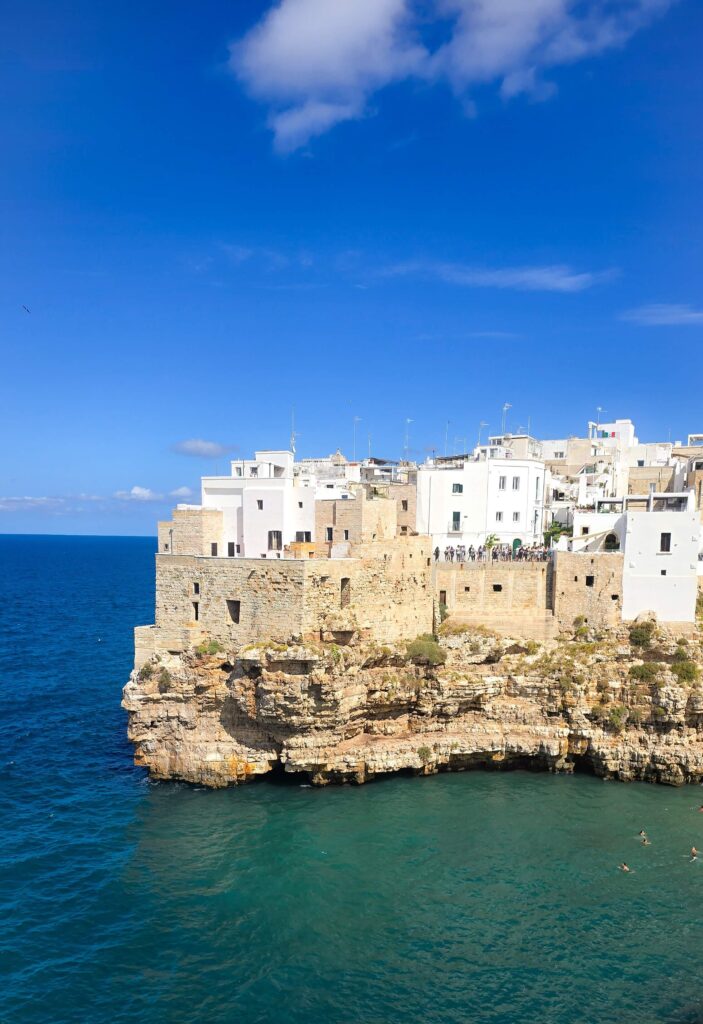
Limestone cliffs
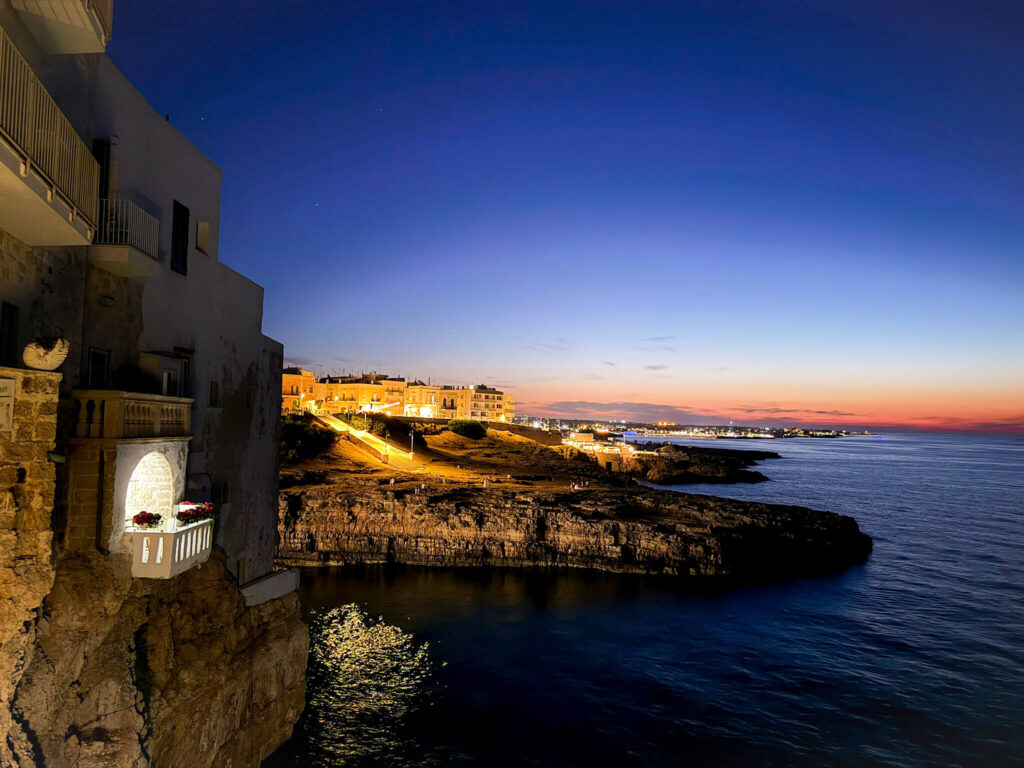
Lama Monachile
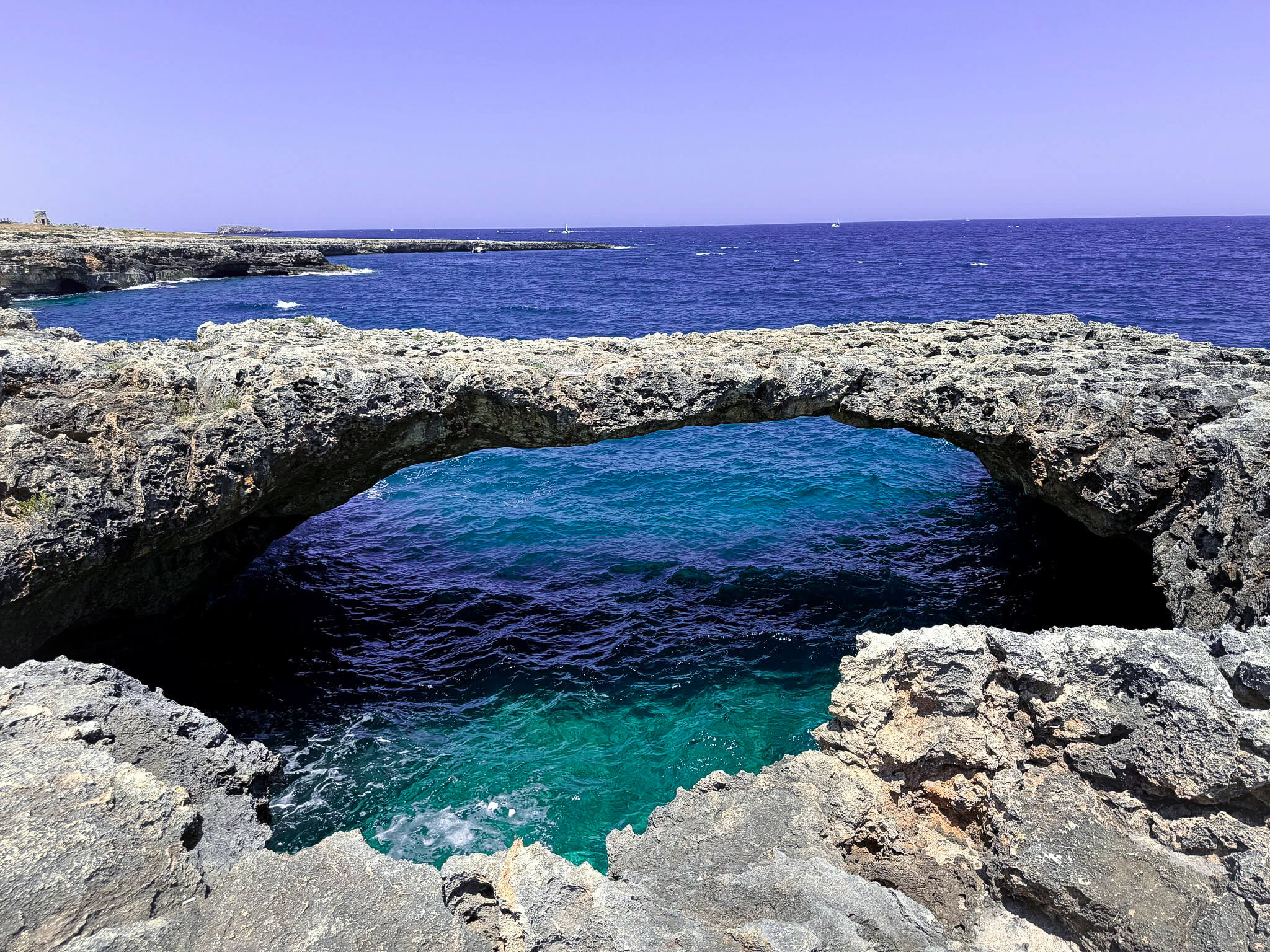
Grotticella Sella
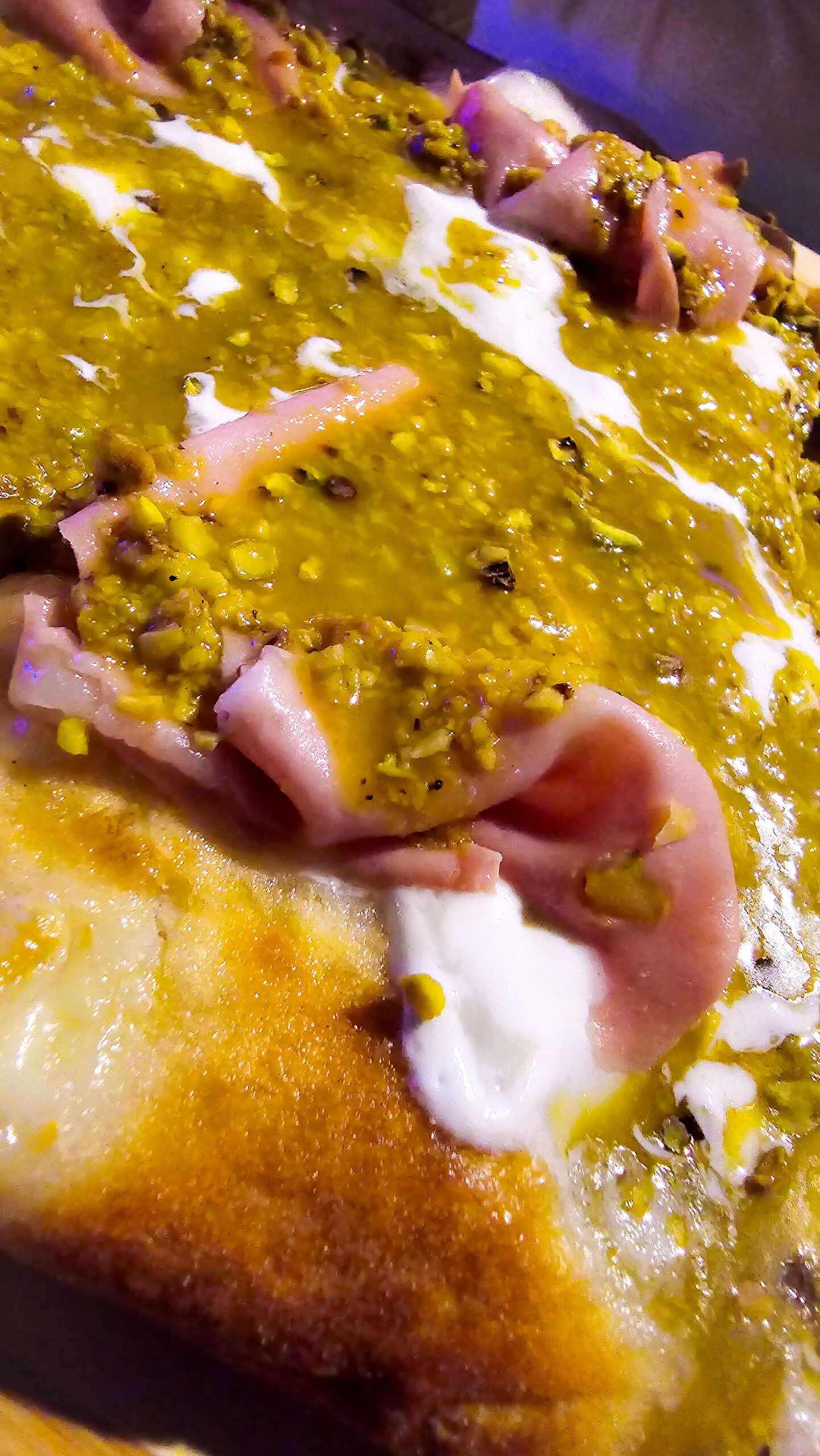
Pizza Time
Polignano a Mare: More Than Instagram Beauty
While Polignano’s clifftop restaurants and turquoise coves dominate social media feeds, the town offers surprisingly rich cultural experiences beyond its photogenic coastline.
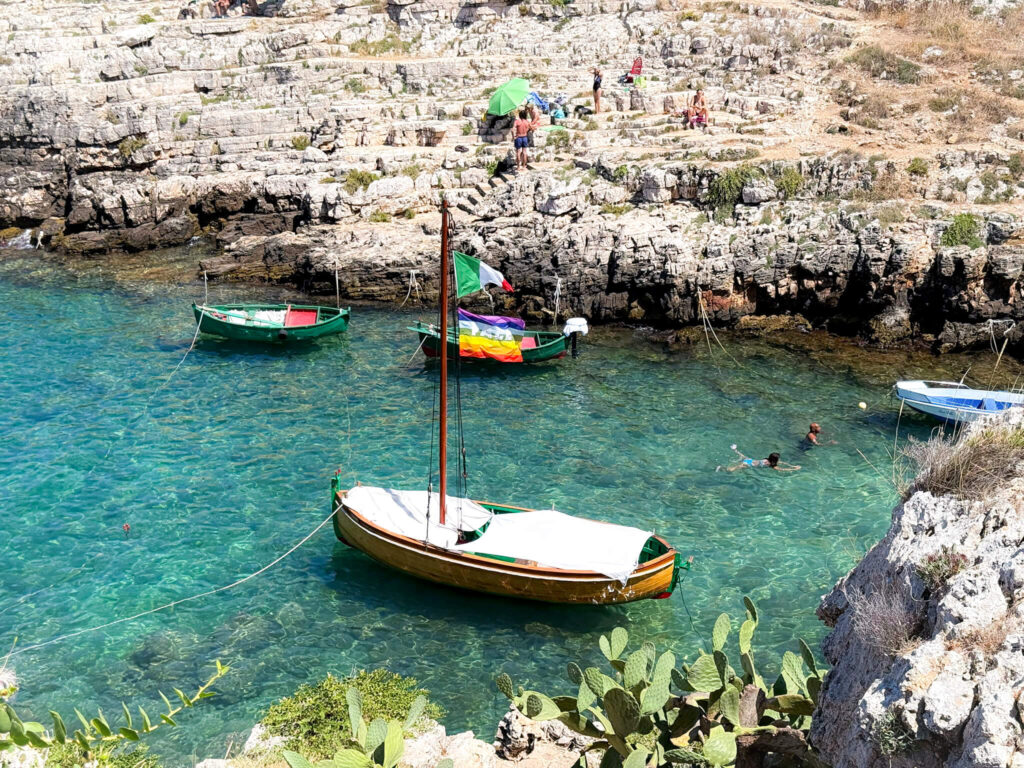
- The Famous Lama Monachile and Beach Culture Lama Monachile Beach remains Polignano’s crown jewel – a dramatic cove carved between towering limestone cliffs that creates one of the Mediterranean’s most spectacular swimming spots. Arrive early morning to avoid crowds and enjoy the best photography light. The beach itself is small and rocky, but the setting is absolutely magical. For a completely different beach experience, drive 3 kilometers south to Cala Paura, where beach clubs offer comfortable loungers and excellent restaurants. The bay here is larger and sandier, perfect for families or those wanting more space to relax.
- Historical and Cultural Attractions Polignano’s Centro Storico deserves exploration beyond the famous viewpoints. The maze of whitewashed streets reveals centuries of history, from Megalithic walls dating to the 4th century BC to Baroque churches that showcase local architectural evolution. The Museo Pino Pascali celebrates Polignano’s most famous artist, whose contemporary works gained international recognition in the 1960s. Located in a converted slaughterhouse, the museum creates dialogue between ancient town walls and cutting-edge art. Don’t miss the Chiesa del Purgatorio, a small baroque church whose ornate facade seems oversized for its intimate interior. Local legends claim the church was built to appease souls trapped between heaven and earth – fitting for a town perched between sea and sky.
- Adventure Activities and Unique Experiences
- Boat tours reveal Polignano’s most spectacular scenery from sea level. Local operators offer 2-3 hour excursions (€25-40 per person) exploring sea caves, hidden coves, and swimming spots inaccessible from land. The Grotta Azzurra and Grotta delle Rondinelle showcase incredible blue-light phenomena created by underwater openings.
- Cliff diving has become synonymous with Polignano, thanks to international diving competitions held at Lama Monachile. While only experts should attempt the 20-meter jumps, watching daredevils leap from the cliffs creates unforgettable entertainment.
Here are the best boat tours you can find online. Reserve your seat on time!
- Evening Magic and Aperitivo Culture Polignano transforms at sunset when day-trippers depart and the town reveals its romantic character. The Belvedere Terrazza becomes the perfect aperitivo spot, while clifftop bars serve local wines as the Adriatic turns gold. Grotta Palazzese, the world-famous restaurant built inside a clifftop cave, represents the ultimate splurge experience (reservations required months in advance, €150+ per person). However, Antiche Mura offers equally spectacular clifftop dining at more reasonable prices, and Il Bastione provides perfect sunset cocktails without breaking your budget.
Polignano a Mare Beaches
- Lama Monachile: The most famous, but also the smallest and most crowded. It’s pebbly, so bring water shoes.
- Cala Paura: A larger, sandier bay just 3 km south of the center, often with beach clubs offering loungers and facilities. It’s a great alternative if Lama Monachile is too busy.
- Cala Porto: Another small, picturesque cove within walking distance of the old town, offering clear waters for swimming.
Pros and Cons of Staying in Polignano a Mare:
- Pros: Unrivaled scenic beauty and dramatic cliff-top setting, highly photogenic, vibrant evening atmosphere, unique cave and sea experiences.
- Cons: Parking is very challenging, can be extremely crowded, especially in peak season and the main beach is small and rocky.
Continuing South: Polignano to Monopoli
The 15-kilometer drive from Polignano to Monopoli offers more coastal beauty on a quieter stretch of the SS16. This section feels more rural, with traditional Pugliese farmhouses and olive groves dominating the inland views. Watch for signs to Capitolo – a sandy beach popular with local families and much less crowded than Polignano’s famous spots. The detour adds only 10 minutes but provides a completely different beach experience.
Monopoli: The Road Tripper’s Favorite
After the dramatic cliffs of Polignano and parking challenges, arriving in Monopoli felt like discovering a perfectly preserved secret. This isn’t a town built for tourists; it’s a vibrant, working fishing port where authentic Pugliese life unfolds daily, making it a true favorite for any Puglia coastal road trip. The old town, with its sun-drenched white buildings, intricate alleyways and bustling harbor, offers a refreshing sense of genuine local charm.
I loved watching the fishermen mend their nets by the old port, the scent of the sea mingling with the aroma of freshly grilled seafood. Monopoli strikes a wonderful balance: it’s picturesque enough to enchant, yet real enough to feel truly immersed in local culture, without the overwhelming crowds of some other coastal hotspots.
Where to Stay in Monopoli
Monopoli offers a fantastic range of accommodations, from charming B&Bs in the historic center to modern hotels with sea views. Many options cater well to road trippers by offering parking or being very close to public parking areas.
- Palazzo Indelli: For a luxurious stay right within the historic walls, this boutique hotel offers stunning sea views and an incredible rooftop pool. While it’s within the ZTL, they often provide assistance with parking outside.
- Masseria Torrepietra A great option slightly outside the immediate historic center, offering easy access to parking and a comfortable stay, an outdoor pool and terrace while still being a short drive to the main attractions and beaches.
- La Casa di Ninetta: For a charming and authentic experience, consider a B&B in the heart of the old town. Always confirm parking arrangements with the property directly via Booking.com.
Where to Park in Monopoly for a Daily Visit
Compared to Polignano, parking in Monopoli is significantly more manageable, making it a road tripper’s delight. The historic center is a ZTL, but plenty of options are available just outside.
- Paid Parking Lots: There are several large, well-marked paid parking lots conveniently located around the perimeter of the old town. Look for signs for “Parcheggio” near the port or along Via Cristoforo Colombo. These typically cost around €1-1.50 per hour.
- Street Parking (Blue Zones): Throughout the modern city center, you’ll find blue-lined street parking. These are paid zones, and meters are usually available.
- Free Parking: In residential areas about 1 kilometer from the center, you can often find free white-lined street parking. It’s a pleasant walk into the historic core from these areas.
- Strategy: Even in peak season, arriving mid-morning or late afternoon usually yields good results.
Exploring Monopoli by Car
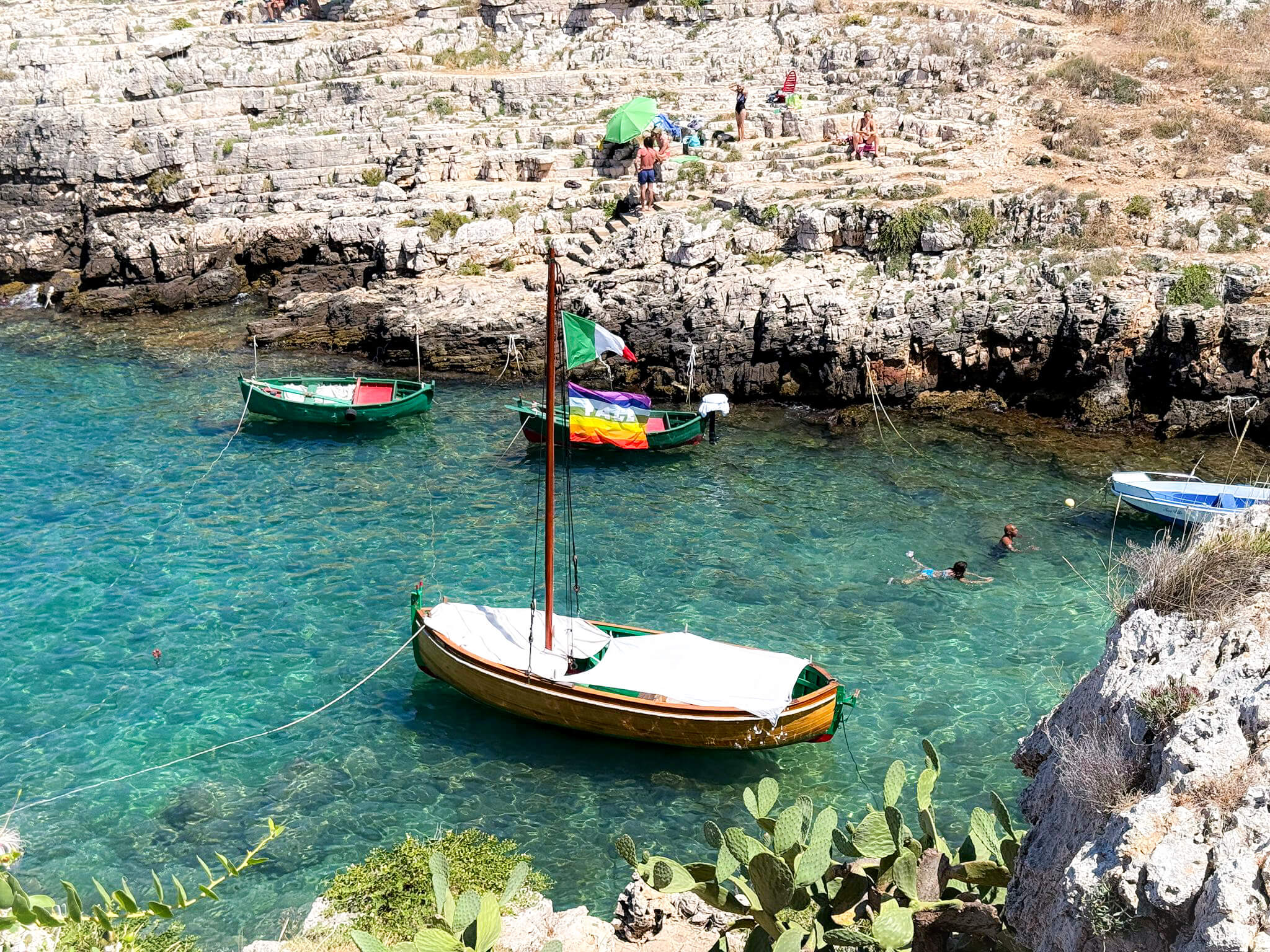
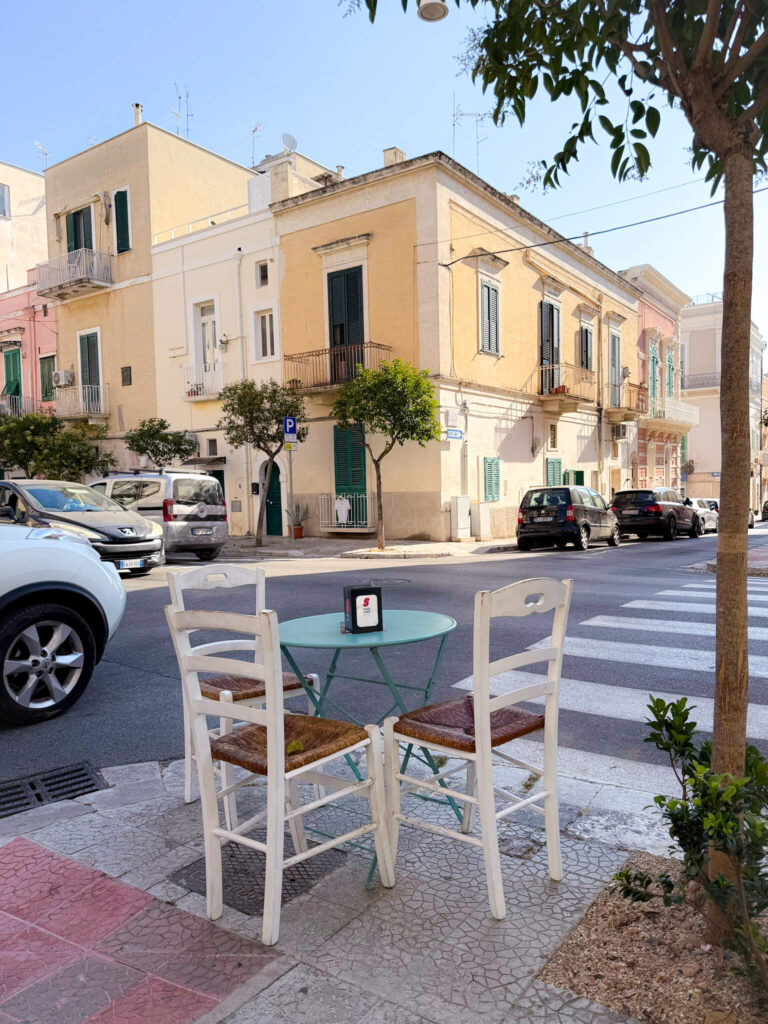
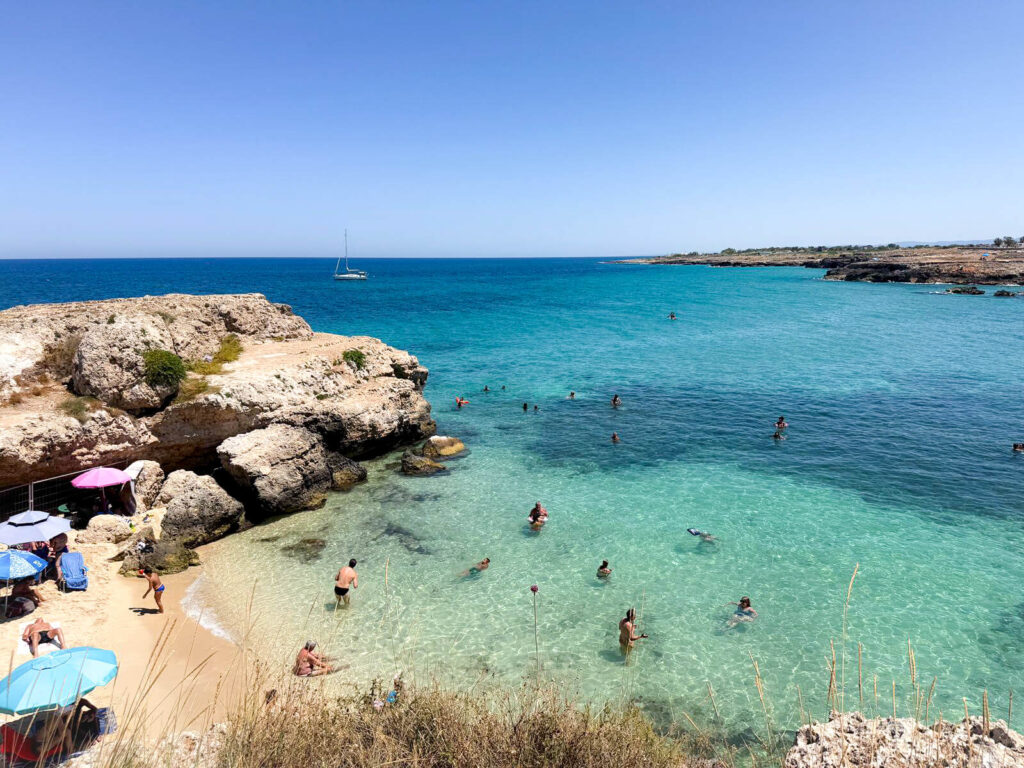
Monopoli’s layout makes it ideal for car-based exploration. The historic center, beaches, and surrounding countryside are all easily accessible by car, letting you experience both urban and rural Puglia. Several excellent beaches lie within a short drive of the center. Cala Paradiso offers parking right at the beach, while Capitolo provides a larger sandy beach with adequate parking facilities.
What to do in Monopoli
Authentic Pugliese Life offers the perfect antidote to Polignano’s tourist intensity – a working fishing port where authentic Italian coastal life continues largely unchanged, making it ideal for travelers seeking genuine cultural immersion.
- The Working Porto Vecchio Monopoli’s old port provides one of Puglia’s most authentic maritime experiences. Arrive at dawn to watch fishing boats return with the night’s catch, followed by animated auctions as restaurant owners bid for the freshest seafood. The scene feels unchanged from centuries past, with weathered fishermen mending nets while seagulls wheel overhead. The port area hosts an impromptu morning market where fishermen’s wives sell the catch directly from wooden crates. This is where local restaurants source their seafood – and where smart travelers buy ingredients for beachside picnics.
- Historical Architecture and Religious Sites The Cattedrale di Maria Santissima della Madia dominates Monopoli’s skyline with its impressive baroque facade and soaring campanile. Inside, the cathedral houses a precious Byzantine icon that, according to legend, arrived floating on a raft (madia) – giving both the cathedral and city their names. The ornate ceiling frescoes and marble altars showcase the wealth that maritime trading brought to medieval Monopoli. Castello di Carlo V, the massive 16th-century fortress guarding the harbor, tells the story of Monopoli’s strategic importance. Originally built by the Spanish to defend against Ottoman raids, the castle now hosts art exhibitions and cultural events. Climb to the ramparts for panoramic views over the old town and coastline. The Chiesa di San Domenico surprises visitors with its elaborate baroque interior hidden behind a simple facade. Local artisans created the intricate wooden ceiling and altar decorations, showcasing Monopoli’s artistic heritage.
- Cultural Activities and Local Experiences The Museo Diocesano houses an impressive collection of religious art spanning centuries of Monopoli’s church history. Highlights include medieval manuscripts, baroque vestments, and archaeological finds from the surrounding countryside. Market days (Saturday mornings) transform Monopoli’s streets into a vibrant social and commercial hub. Local farmers sell seasonal produce, while vendors offer everything from fresh pasta to handmade ceramics. This is Monopoli at its most authentic – bustling, loud, and utterly engaging. Several agriturismo operations in the surrounding countryside offer hands-on experiences with olive oil production, wine making, and traditional cheese crafting. Having a car makes these authentic farm experiences easily accessible.
- Evening Traditions and Local Life Monopoli’s evening passeggiata follows a different rhythm than in tourist towns. Locals dress up for their traditional evening stroll, stopping at bars for aperitivo and gathering in piazzas for animated conversations. As a visitor, you’re welcomed into this daily ritual rather than observing from outside. The lungomare (seafront promenade) becomes particularly magical at sunset, when fishing boats return and the limestone buildings glow golden against the darkening sea. Local bars serve excellent aperitivo spreads, and the pace is refreshingly unhurried.
- Gastronomic Heritage Monopoli’s restaurants focus on ultra-fresh seafood and traditional Pugliese preparations rather than tourist-friendly adaptations. Crudo di ricciola (raw amberjack), spaghetti ai ricci (sea urchin pasta), and orata in crosta di sale (salt-crusted sea bream) showcase the maritime culinary tradition. Local specialties include bombette (stuffed meat rolls), burrata cheese from nearby Andria, and puccia bread stuffed with local vegetables and cheese. These dishes reflect Monopoli’s position between sea and countryside, combining the best of both environments.
Monopoli Beaches
Unlike the dramatic cliffs of Polignano, Monopoli’s coastline offers diverse beach experiences. Cala Porta Vecchia, right in the historic center, provides rocky platforms perfect for swimming and sunbathing alongside local families. This is where Monopoli’s residents gather every evening after work, creating an authentic social scene. Cala Paradiso, just 2 kilometers from the center, offers a small pebble beach with crystal-clear water and easy parking. The intimate cove feels almost private, especially on weekdays. For traditional sandy beaches, Capitolo (5 kilometers south) provides wide expanses of fine sand, beach clubs with full facilities and excellent restaurants. Local families favor this spot for weekend beach days, and the authentic atmosphere contrasts sharply with more touristy coastal areas.
Pros and Cons of Staying in Monopoli:
- Pros: Authentic working fishing port, more relaxed atmosphere than Polignano, relatively easier parking, excellent base for exploring both coast and nearby countryside, diverse beaches easily accessible.
- Cons: Less dramatic cliff scenery than Polignano a Mare, might feel less “touristy” if you prefer a more bustling, Instagram-famous vibe.
Practical Road Trip Tips & Itinerary Ideas
Road Trip Logistics
- Fuel and Facilities: Gas stations are plentiful along the SS16, though prices are higher than inland locations. Many stations close on Sundays and after 8 PM, so plan accordingly. Self-service pumps are common and cheaper. Each town has ATMs and pharmacies, making it easy to handle any travel needs. Supermarkets in the newer sections of each city offer supplies for beach picnics and car snacks.
- Traffic Patterns and Timing: Peak season (July-August) brings the heaviest traffic, especially on weekends. Locals typically hit the beaches between 10 AM and 6 PM, so plan your driving around these patterns. Shoulder seasons (May-June, September-October) offer ideal driving conditions with lighter traffic and easier parking, while still providing excellent weather for coastal activities.
- Communication and Navigation: Italian driving requires assertiveness but not aggression. Local drivers understand that tourists need extra time for navigation and are generally patient with reasonable mistakes. Download offline maps for your entire route before starting your journey – Google Maps works well. I always use Airalo E-SIM, so I don’t worry about Internet data.
Essential Road Trip Gear and Preparation
- Documentation and Legal Requirements: Non-EU drivers need an International Driving Permit in addition to their regular license. Keep all documentation easily accessible – police checks are rare but do happen. Comprehensive insurance coverage is essential. Many credit cards offer rental car insurance, but verify coverage specifics before traveling.
- Practical Packing: Italian cars tend to be smaller than American equivalents, so pack strategically. Soft-sided luggage works better than hard cases for fitting in compact trunks. Always carry:
- Coins for parking meters and tolls
- Basic Italian phrases for asking directions
- Emergency contact information for your rental company
- Comfortable walking shoes for exploring historic centers
Multi-Day Strategies
For longer stays, consider basing yourself in one location and taking day trips. Bari works well for urban amenities and easy airport access. Polignano offers the most dramatic setting but limited parking. Monopoli provides the best balance of charm and practicality. Alternatively, plan a progressive journey, spending 2-3 nights in each location. This reduces packing and unpacking while letting you experience each destination fully.
The Road Trip Advantage: Why a Car is King in Puglia
Choosing to explore this coastal region by car opens possibilities that other transportation methods simply can’t match. You can discover hidden beaches where tour buses never venture, arrive at restaurants without worrying about train schedules and change your plans spontaneously when you spot an intriguing road sign. Visit AutoEurope and find a perfect vehicle for your Puglia coastal road trip.
The freedom to stop for photos at scenic overlooks, explore side roads to forgotten fishing villages and carry picnic supplies for spontaneous beach meals transforms a simple coastal visit into a genuine adventure. Most importantly, having a car lets you experience these destinations at different times of day. Watching sunrise over the Adriatic from a secluded beach, then returning to the same spot for sunset aperitivo, creates memories that scheduled tours simply can’t provide.
This stretch of Pugliese coast rewards independent exploration, and there’s no better way to achieve that independence than with your own set of wheels. The road itself becomes part of the adventure, connecting not just destinations but moments of discovery that make road trips uniquely rewarding.
Pack your sense of adventure, bring your camera and prepare for one of Italy’s most beautiful coastal drives. The combination of stunning scenery, authentic culture and road trip freedom makes this corner of Puglia absolutely unforgettable.