
Spectacular Milan: A Complete Guide to the City That Will Amaze You
I’m writting this Milan travel guide for travelers who want to understand Milan, not just see it. Whether you’re planning a short city break, arriving by car or using Milan as a base for northern Italy road trips — this is the Milan I wish someone had told me about before my first visit.
People love to say Milan isn’t real Italy.
That it’s too industrial. Too busy. Too serious. That there’s not much to see or do compared to Rome, Florence or Venice.
Those were exactly the things people told me before my first trip to Milan – which also happened to be my very first time in Italy.
I arrived curious, but with low expectations.
And then Milan quietly surprised me.
Not with postcard moments or dramatic beauty – but with atmosphere, elegance, everyday rituals and a sense that this city lives very much in the present while carrying centuries of history with ease. I fell in love on that first visit. And then I came back. And then again.

Getting to Milan: Airports, Trains & Cars
Milan is one of the easiest cities in Italy to reach — whether you’re flying, driving or combining it with a road trip. This city is served by three airports, and this Milan travel guide will help you choose the right one and make your arrival much smoother.
Milan Airports Explained (MXP, LIN & BGY)
Milan Malpensa (MXP)
The largest international airport. Located about 50 km from the city center. Best for long-haul and major international flights. Connected to Milan by train and bus.
To the city center you can use a direct bus transfer with no intermediate stops, including free luggage transfer. The bus goes to Milano Centrale railway station, and the ticket is valid for all departures on the selected day, which is very convenient if your flight is delayed.
Milan Linate (LIN)
The closest airport to the city center, located just 7 km away. It’s perfect for short European flights and domestic routes. Linate offers the fastest transfer into the city, thanks to the M4 metro line, which connects the airport directly to central Milan.
Bergamo Orio al Serio (BGY)
This is the airport most low-cost airlines use — and honestly, it’s a great option. Located about 50 km from Milan, with very frequent direct buses to Milano Centrale.
Tip: If you’re flying with a low-cost airline, Bergamo is often the smartest choice. The bus transfer is simple, affordable, and drops you right in the city center. You can find very cheap bus transfers from Bergamo Airport to Milan, with departures scheduled for every arriving flight — so you won’t be waiting for hours. In fact, the transfer usually waits for you.
Milan by Car: It’s Easier Than You Think
Despite its reputation, Milan is surprisingly easy to navigate by car – especially compared to other Italian cities.
- Roads are well-marked
- Navigation apps work perfectly
- Parking is manageable if you choose accommodation wisely
Just be mindful of ZTL zones (limited traffic areas) in the city center. This is why I often recommend staying slightly outside the very center if you’re driving.
Milan also makes a fantastic base for road trips across northern Italy – lakes, mountains, and even Switzerland are just a short drive away.
Where to Stay in Milan (By Plane vs By Car)
Choosing where to stay in Milan really depends on how you’re traveling.
If You’re Coming by Plane
- Staying close to the city center is ideal
- Look for accommodation near metro lines — Milan’s metro is fast, clean and easy to use
- You don’t need to be right next to the Duomo di Milan to be well connected
Heart Hotel is a great option, it’s inside the first ring of the city, very close to the tram and metro station.
If You’re Coming by Car
- I strongly recommend places with free or included parking
- Staying just outside the strict city center saves time, stress and money
- You’ll still be well connected by metro or tram
Ampio Monolocale – the place where we stayed last time. Parking on the street is free, but they also provide garage space.
My Favorite Area: Navigli 💙
No matter how you arrive, Navigli is my favorite neighborhood in Milan.
- Beautiful canals
- Lively but not overwhelming
- Amazing food and aperitivo culture
- Well connected to the rest of the city
It feels local, creative and relaxed – and it shows a softer, more romantic side of Milan.
Getting Around Milan
Milan is one of the most walkable cities in Italy.
Most major attractions are close enough that you can easily walk from one to another – and honestly, walking is part of the experience.
When you get tired:
- Metro 🚇
- Trams 🚋
- Buses 🚌
Public transport is reliable, affordable and easy to understand even if it’s your first time in the city. One of the best things about public transport in Milan is that you can pay for your ticket directly inside trams and buses using a credit card.
Things to See & Do in Milan (Yes, There’s A Lot!)
Milan is one of those cities that doesn’t reveal itself all at once.
Its beauty is layered – architectural, cultural and deeply tied to how the city lives today. You don’t just tick off attractions here; you experience them slowly, often discovering that the stories behind the places are just as fascinating as the places themselves.
Duomo di Milano – The Heart of the City
The Duomo isn’t just Milan’s most famous landmark — it’s the city’s soul.
Construction began in 1386 and took nearly six centuries to complete, which is why the cathedral feels like a mix of different eras, styles and ambitions. Built almost entirely of white-pink marble, the Duomo is covered with over 3,400 statues, more than any other cathedral in the world.
One of the most fascinating details is the Madonnina, the golden statue on top of the cathedral. For centuries, no building in Milan was allowed to be taller than her – and even today, replicas are placed on newer skyscrapers as a sign of respect.
Walking on the rooftop terraces is an absolute must. The first time I stood up there, I remember thinking how quietly powerful Milan feels when you look at it from above – calm, ordered and confident.
There are several ticket options for visiting the Duomo, but my personal recommendation is the one that includes elevator access to the rooftop and a walk down through the terraces and interior of the cathedral via the stairs.
It’s the best way to experience the Duomo step by step – starting with panoramic views over Milan and slowly descending into the heart of the church itself. This ticket also saves a lot of energy, especially if you’re visiting during a full sightseeing day.
You can book a skip-the-line tickets with rooftop access in advance, which I highly recommend during busy periods.

Galleria Vittorio Emanuele II – Milan’s Living Room
More than a shopping arcade, the Galleria is where Milan comes to stroll, meet and linger.
Built in the 19th century, it’s one of the oldest shopping galleries in the world, crowned by a spectacular glass dome. Locals don’t come here only to shop — they come for espresso at historic cafés, evening walks, or simply to cross from the Duomo to La Scala.
Fun fact: Look down at the mosaic floor and you’ll see a bull. Spinning on its testicles with your heel is said to bring good luck – and yes, you’ll see people doing it all day long.


Castello Sforzesco & Parco Sempione – Power, Art & Green Escape
Once a symbol of Milan’s political and military power, Castello Sforzesco today feels surprisingly welcoming. Here you can find entry ticket with digital audio guide.
Inside its walls are several museums, including works connected to Leonardo da Vinci, who actually worked on the castle’s fortifications. But even if you skip the museums, the castle itself is worth the visit.
Right behind it, Parco Sempione opens up like a breath of fresh air. Locals picnic here, jog, read or simply rest between meetings. It’s one of the best places to slow down in a city often seen as fast-paced.
The Last Supper – Seeing a Legend in Real Life
Leonardo da Vinci’s Last Supper isn’t impressive because of its size – it’s impressive because of its humanity.
Painted directly onto the wall of a monastery dining hall, the fresco captures the exact moment Jesus announces that one of the apostles will betray him. The emotions, gestures and expressions feel incredibly modern.
Because of its fragile condition, only a limited number of people can enter at a time, which makes the experience quiet, intimate and almost meditative.
Booking in advance isn’t just recommended – it’s essential. Guided visits with guaranteed entry are often the easiest way to secure a spot, especially if Milan is part of a longer Italy itinerary.

Leonardo da Vinci Museum of Science & Technology – Milan’s Curious Side
This museum reflects Milan perfectly: intelligent, innovative and always forward-looking.
You’ll find models based on Leonardo’s original sketches, but also exhibitions dedicated to trains, ships, aviation, and space. It’s engaging even if you don’t consider yourself a museum person — and surprisingly fun.

Brera – Art, Elegance & Everyday Milan
Brera is where Milan softens.
This artistic district is home to the Brera Art Gallery, but its real charm lies in the streets themselves. Narrow lanes, small galleries, bookstores and cafés create an atmosphere that feels intimate and creative.
It’s a perfect place to wander without a plan – especially in the late afternoon when the neighborhood slowly transitions into evening aperitivo mode.

Navigli – Milan After Dark
Navigli is proof that Milan knows how to relax.
Designed in part by Leonardo da Vinci himself, the canals were once used to transport marble for the Duomo. Today, they’re the center of Milan’s social life.
In the evening, people gather along the water for aperitivo – a uniquely Italian ritual where drinks come with generous snacks. This is usually where my Milan evenings end, sitting by the canal with a drink and realizing that Milan isn’t cold at all – it’s just understated.
Food and aperitivo tours in Navigli are a great way to experience this side of the city if you’re short on time, and they often include local spots you wouldn’t find on your own. It’s lively, social, and effortlessly cool.

Prada Fondazione – Where Milan Gets Bold
Prada Fondazione shows Milan’s experimental side.
Set in a former industrial complex, it combines contemporary art, architecture, cinema, and philosophy. Exhibitions are often provocative, sometimes confusing — and always interesting.
Even if modern art isn’t your thing, the space itself is worth visiting. And yes, the café designed by Wes Anderson is as cinematic as you’d expect.
Bosco Verticale – A Glimpse of Milan’s Future
Bosco Verticale isn’t just photogenic – it’s a statement.
These two residential towers host thousands of trees and plants, helping regulate temperature and improve air quality. They represent Milan’s commitment to sustainable urban living.
You can’t go inside, but seeing them up close is a reminder that Milan constantly reinvents itself.
Teatro alla Scala – Music, Prestige & Emotion
La Scala is one of the most important opera houses in the world.
If you have the chance to attend a performance, do it – even if opera isn’t normally your thing. The atmosphere alone is unforgettable. During the day, the museum offers insight into centuries of musical history and Milan’s deep cultural roots.
Fashion & Design – More Than Shopping
Fashion in Milan isn’t about trends – it’s about identity.
Places like Armani/Silos, Triennale di Milano, and the city’s design districts show how deeply design is woven into everyday life here. Milan doesn’t just follow global aesthetics – it helps define them.
This creative energy is part of what makes the city feel so alive.
Day Trips From Milan (One of Its Biggest Advantages)
One of the reasons I keep coming back to Milan is simple: it’s one of the best bases for day trips from Milan anywhere in Italy. You don’t need to change hotels or rush through destinations – you can wake up in the city, take a short trip, and be back for aperitivo.
In less than two hours, the scenery, pace and even the country can completely change.
Lake Como is often the first name that comes up when people talk about day trips from Milan, and yes – it really is that beautiful. Elegant villas, dramatic mountains and the kind of lake views that feel almost unreal. This is the best tour you can find – from Milan to Como, Bellagio and Lugano boat ride. If you’re traveling by car, parking is easiest in towns like Como or Varenna, where public parking garages are clearly marked near the center. From there, ferries connect the lake villages easily.
Driving here is straightforward, and the route itself is already part of the experience.
Lugano proves how close Switzerland feels when you’re in Milan. This is one of those international day trips from Milan that sounds complicated but isn’t. By car, Lugano is around an hour away, and parking is simple in underground garages near the lakefront or city center. Just remember to carry your ID for the border crossing – it’s usually quick, but still a crossing. Here you can buy train tickets from Milan to Lugano.
Turin (Torino) offers a completely different atmosphere. Grand, elegant, and quietly confident, it feels less touristy and more lived-in. If you’re driving, parking garages near Porta Nuova or Porta Susa train stations are a good option, allowing you to explore the historic center on foot. If you want to go to Turin by train, here you can buy tickets. Turin is flat, walkable and perfect for a slow day of cafés and architecture.
Bergamo is one of the easiest and most rewarding short day trips from Milan. The lower town is modern, but the magic is in Città Alta. By car, you can park in the lower city and take the funicular up, or use designated parking areas just outside the old walls. Walking through the upper town feels like stepping into a different century. If you want to go by bus, here you can find the cheapest tickets from Milan to Bergamo.
Lake Maggiore is quieter and more relaxed than Como, which is exactly why it works so well as a road trip. Parking is generally easier here, especially in towns like Stresa, where lakeside parking areas and garages are available. It’s a great choice if you want nature, views and space to breathe – without crowds. If you don’t have a car, you can reserve this full-day tour from Milan to lake Maggiore.
Whether you choose guided tours, trains or road trips, these destinations show why day trips from Milan are such a strong part of the experience. The city gives you freedom — not just things to see.
For travelers by car, Northern Italy is incredibly road-trip friendly. Highways are well maintained, signage is clear, and some of the best moments happen when you take a scenic exit instead of the fastest route.
To check Italian highway toll prices in advance, the most reliable official website is Autostrade per l’Italia, where you can calculate toll costs between cities before you drive. It’s especially useful when planning multiple day trips from Milan by car.
Bonus: Formula 1 in Monza 🏎️
Just outside Milan is Monza, home to one of the most iconic Formula 1 races in the world. During race weekends, the entire area feels alive — even if you’re not an F1 fan, the atmosphere alone is worth experiencing.
If you’re driving, parking is organized around the circuit with shuttle buses running frequently on race days. It’s one of those events that fits perfectly into a Milan-based itinerary and shows another side of the region’s energy.
Where to Eat & Drink in Milan Like a Local
Milan’s food scene is often associated with fine dining, Michelin stars, and perfectly styled plates – but that’s only one side of the city. Beneath the polished surface, Milan hides a more relaxed, everyday food culture where locals eat well without making a big show of it.
I’ll be honest: I rarely follow the “most recommended” places you see everywhere online. I prefer walking, observing and trusting my instincts – and somehow, I’m really good at finding places that feel authentic, affordable and memorable. It’s the same in this Milan travel guide – this city didn’t disappoint.

Trattoria Il Marinaio
Trattoria Il Marinaio feels like one of those places locals don’t advertise – they just keep coming back. It’s a classic, no-nonsense trattoria focused on fresh seafood, with portions that don’t pretend to be minimal.
If you’re craving seafood in Milan and want something authentic rather than trendy, this spot feels like a small win.
The Fisherman Pasta (pasta-focused spot)
If pasta is your love language, The Fisherman Pasta is a place you’ll appreciate immediately. The menu offers a surprisingly wide choice of pasta dishes, from classic combinations to more playful, modern twists.
What I liked most is that the place doesn’t try too hard – it’s casual, welcoming, and focused on comfort food done right. It’s the kind of spot you choose when you’re hungry, not when you want to impress Instagram.
Perfect for an easy lunch or a relaxed dinner after a long day of walking through the city.
Gino12 – probably the smallest gin distillery in the world
Gino12 might just be one of Milan’s most charming surprises. It’s probably the smallest gin distillery I’ve ever seen — and that’s exactly what makes it special.
The atmosphere is intimate, almost secret and you can really feel the passion behind what they do. If you’re into gin (and you know I am 😉), this place is more than just a drink stop – it’s an experience. Read more about GinO12 distillery.
A perfect place to slow down, chat, and enjoy something crafted with care rather than mass-produced.
Ceresio 7 – cocktails with a view
Ceresio 7 is where Milan shows its glamorous side. I visited during a sunny day, and honestly – having cocktails by the pool with panoramic views of the city felt a little surreal.
Yes, it’s fancy, and yes, it’s more expensive – but the experience matches the price. The atmosphere is relaxed yet elegant, and it’s the kind of place that turns a normal afternoon into a memory.
If you’re in the mood to dress up a bit and enjoy Milan from above, this spot is absolutely worth it.
Milan Travel Guide FAQ (Quick Answers for First-Time Visitors)
Is Milan worth visiting for first-time Italy travelers?
Absolutely.
Milan is a fantastic introduction to Italy – modern yet historic, elegant yet lived-in. It’s less overwhelming than Rome, less touristy than Florence, and gives you a real feel for contemporary Italian life.
How many days are enough for Milan?
- 2 days – Highlights (Duomo, city center, one major museum)
- 3 days – Ideal pace with neighborhoods like Brera and Navigli
- 4+ days – Perfect if you plan day trips (Lake Como, Bergamo, Turin)
Is Milan walkable?
Yes – very.
Most attractions are within walking distance, and strolling between neighborhoods is one of the best ways to experience the city. When you get tired, public transport fills the gaps perfectly.
Is Milan good for road trips?
Milan is one of the best road trip bases in Italy.
From here you can easily reach:
- Lakes (Como, Maggiore, Bellagio, Garda)
- Mountains
- Wine regions
- Switzerland
Highways are excellent, signage is clear and distances are short.
Which airport is best for Milan?
- Linate (LIN) – Best if you want the fastest transfer to the city
- Malpensa (MXP) – Best for long-haul and international flights
- Bergamo (BGY) – Best for low-cost airlines and budget travelers
For many travelers, Bergamo offers the best balance between price and convenience.
Final Thoughts: Milan Deserves More Love

Milan isn’t loud about its beauty.
It doesn’t try to impress you instantly.
But if you give it time – if you walk its streets, sit in its cafés, explore its neighborhoods – it slowly wins you over.
Just like it did with me.
And if Milan was my first impression of Italy – I honestly couldn’t have asked for a better one.
Road Sips tip: Milan is not just a destination. It’s a base, a feeling and a starting point for some of the best journeys in northern Italy.
I hope you liked this Milan travel guide.
Where to go next in Italy
If Milan is your starting point, Italy has very different regions worth exploring next. While northern Italy is known for cities and lakes, southern Italy offers a slower pace, coastal roads, and small historic towns.
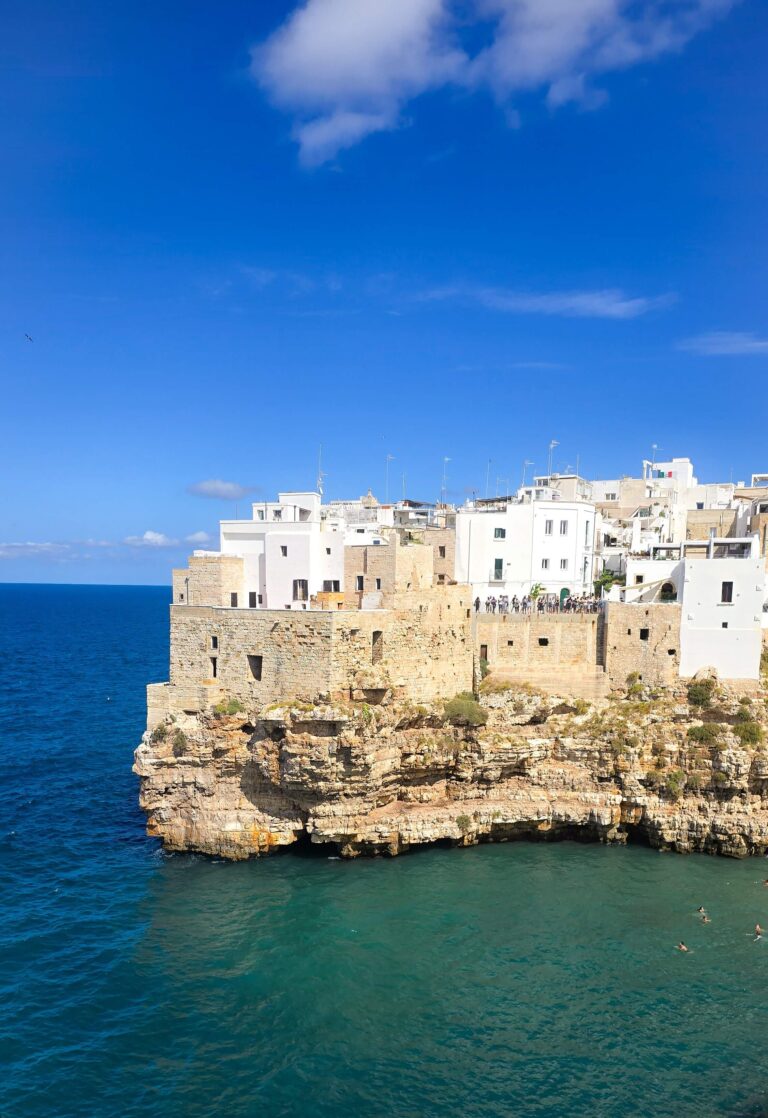
If you’re planning a longer itinerary, Puglia is one of the best regions for a scenic road trip, with white villages, beaches and affordable accommodations.
See you in the next article 💙