Alberobello Guide to Amazing Puglia’s White Towns and Itria Valley
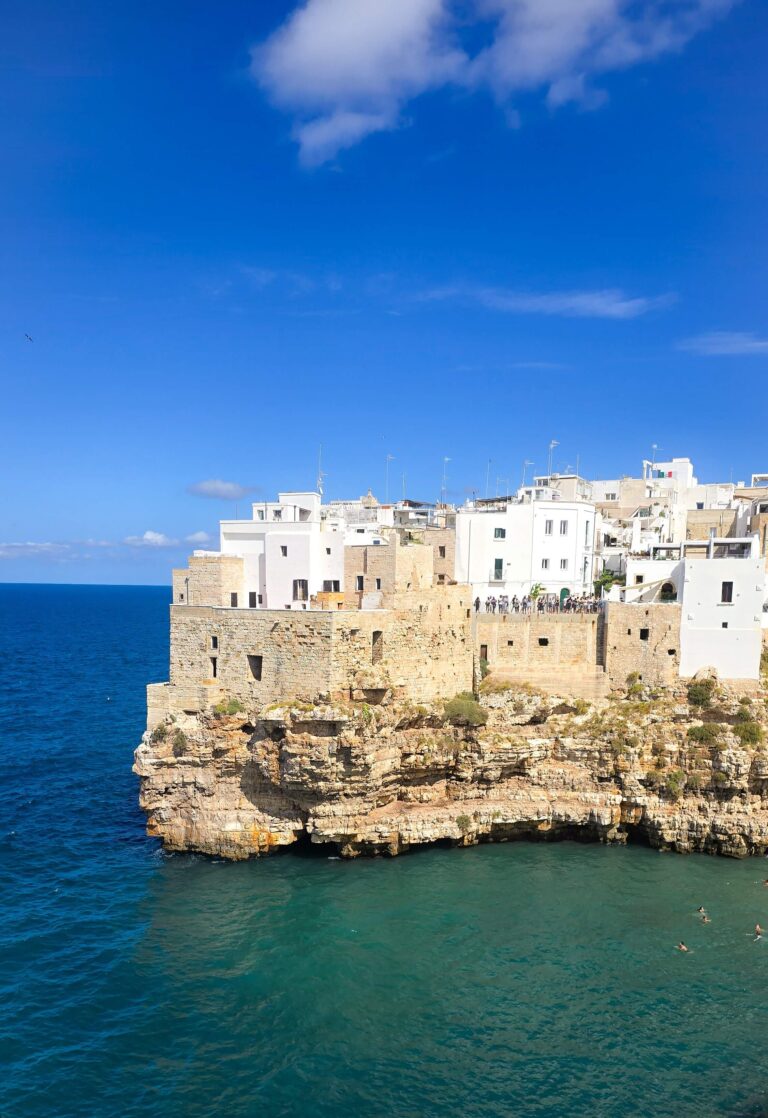
Welcome back to Puglia! This Alberobello guide will help you explore the magical heart of Puglia, a region too rich and diverse for just one guide. In my previous article, we explored the vibrant Adriatic coast, from the bustling energy of Bari to the cliff-top drama of Polignano a Mare and the authentic charm of Monopoli. Now, get ready to venture inland into the magical heart of Puglia: the Itria Valley.
This guide is part of a larger series, so if you’re looking for a more comprehensive plan, be sure to check out our 10-Day Car Guide to Italy’s Hidden Gem: Unforgettable Puglia Road Trip.
This installment of your Puglia road trip will take you through a landscape straight out of a fairy tale, dotted with iconic trulli houses, dazzling white-washed hilltop towns and elegant baroque architecture. We’ll be focusing on three absolute gems: Alberobello, the famous trulli capital; Locorotondo, the perfectly circular white town; and Martina Franca, a sophisticated hub of baroque splendor.
Having personally navigated every winding road and explored every charming alley in this unique corner of Italy, I can tell you that the Itria Valley is where Puglia truly reveals its most enchanting secrets. And yes, a car is, once again, your indispensable companion for unlocking its full magic.
General Road Trip Tips for the Itria Valley
One of the best things about driving in Puglia is how easy it is! Unlike some other parts of Italy, there are no tolls to pay on the roads that connect these beautiful towns. You’ll also find several gas stations along the main routes, which is great for peace of mind. A little tip from my own experience: if you use the self-service option, petrol is a bit cheaper than at the full-service pumps.
Why the Itria Valley Demands a Car
While the coastal towns might have some limited train connections, the true essence of the Itria Valley lies in its sprawling countryside and the intimate connections between its small, picturesque towns. Public transport here is sparse and inefficient, making a car not just convenient, but absolutely essential for:
- Chasing trulli views: The most stunning trulli aren’t just in Alberobello; they’re scattered across the rolling hills, best discovered by car.
- Exploring hidden masserie: Many of the best agriturismos, olive oil mills and wineries are off the beaten path.
- Seamless town hopping: The towns of the Itria Valley are close, but having your own wheels means you can effortlessly jump from one to another, stopping at viewpoints or local markets along the way.
- Flexibility: Linger longer in a town you adore, or spontaneously detour to a local festival or a charming roadside stand.
Just like our coastal adventure, booking your car in advance via AutoEurope.eu remains my top recommendation for securing the best rates and car type for navigating these charming, sometimes narrow, Puglian roads.
Best Time for Your Puglia Road Trip
The Itria Valley offers a slightly different climate experience than the coast, with warm days and cooler evenings, especially in the shoulder seasons.
- Late May to Early June: My absolute favorite time. The countryside is lush, wildflowers are blooming and the weather is warm and sunny without being oppressive. Crowds are manageable and all attractions are open.
- September to Early October: Another fantastic period. The intense summer heat has subsided, the grape harvest is in full swing (offering unique experiences) and the light for photography is beautiful. The sea is still warm enough for a dip if you venture to the coast.
- July and August: Expect hot temperatures and peak tourist crowds, especially in Alberobello. If you visit then, plan your sightseeing for early mornings or late afternoons and enjoy long lunches in shaded courtyards.
- Off-Season (November-April): Quieter, cooler and some smaller establishments might be closed. However, you’ll experience a more authentic local life and enjoy the towns without the crowds.
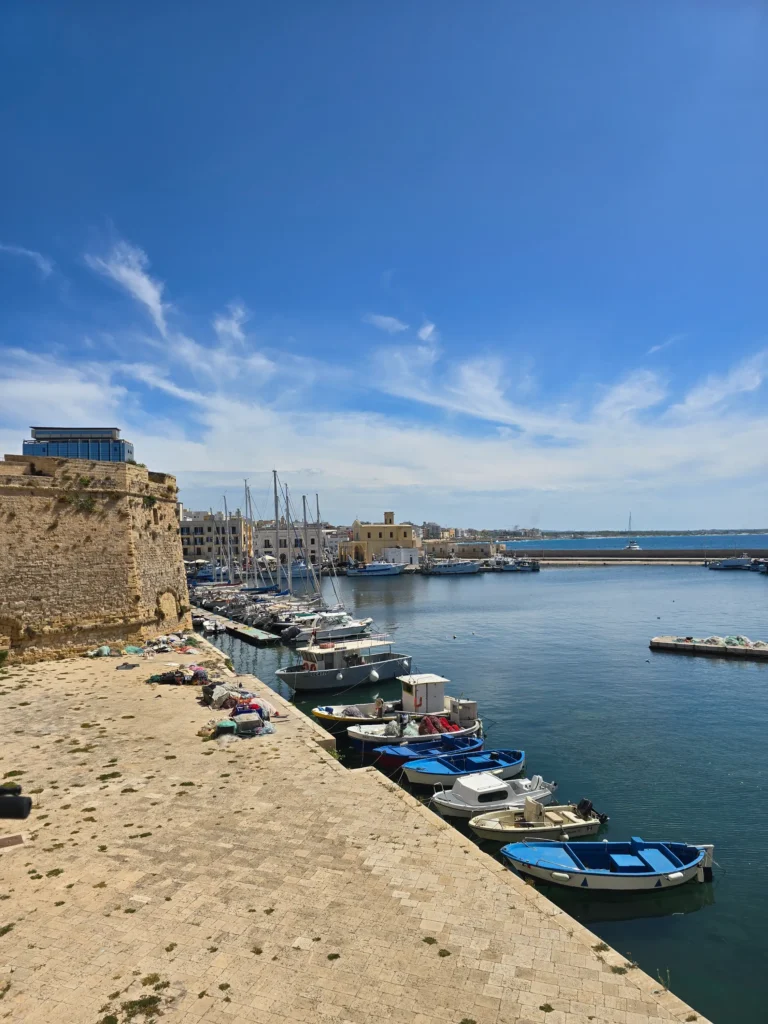
Alberobello fits perfectly into a longer Puglia road trip. After exploring the trulli, many travelers head toward the Salento coast, where Gallipoli offers a completely different experience with beaches, historic walls, and relaxed coastal evenings.
Your Itria Valley Guide: Alberobello, Locorotondo & Martina Franca
Alberobello Guide: Home of the Trulli
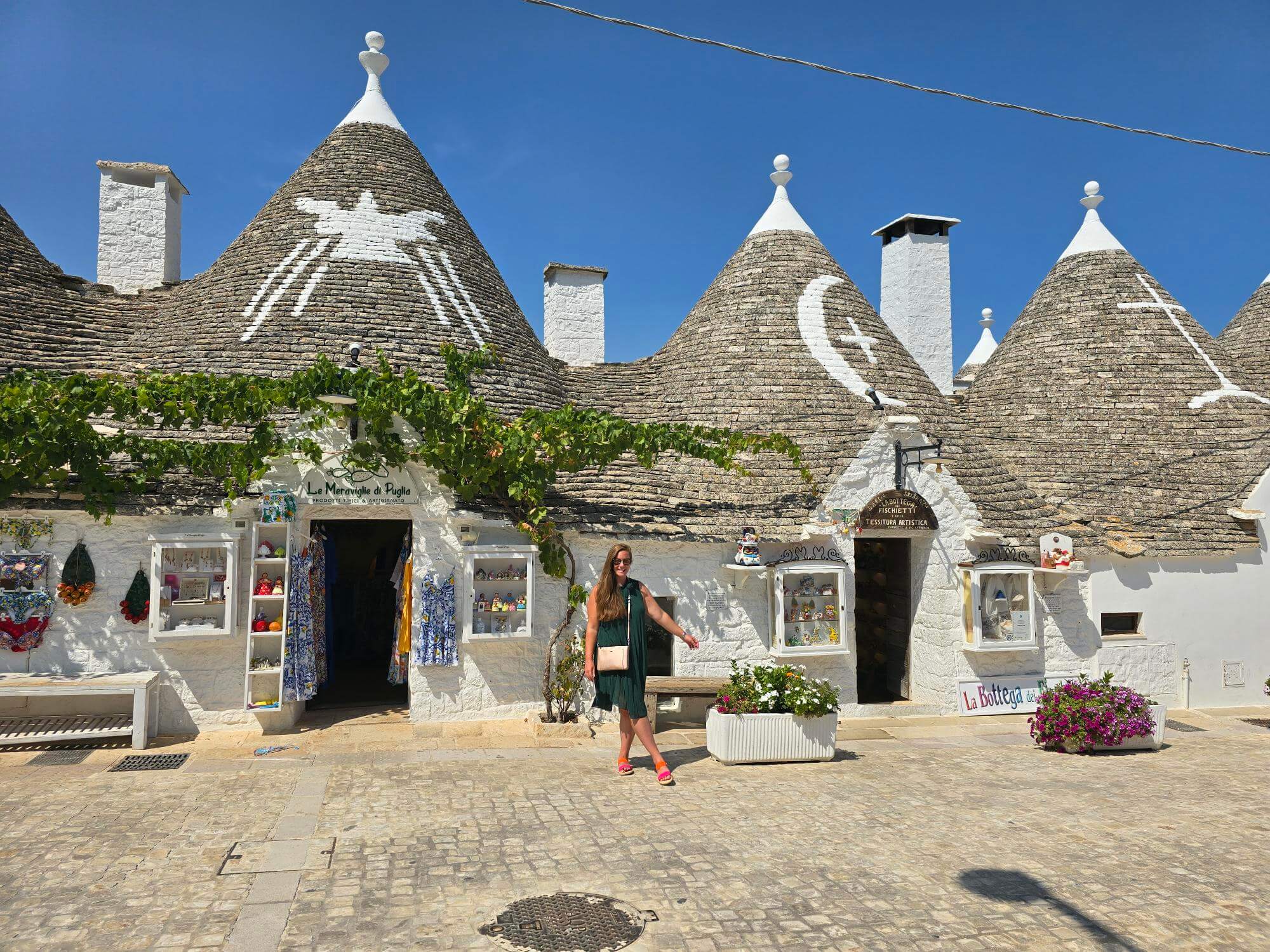
Driving south from Bari for about 50 minutes, you’ll enter a landscape that gradually transforms, and then, suddenly, you’ll see them: the iconic trulli houses of Alberobello. This UNESCO World Heritage site is a truly unique destination, a town where over a thousand white-washed, cone-roofed dwellings cluster together, creating a scene straight out of a storybook.
The Fascinating History of the Trulli The trulli (singular: trullo) are not just pretty houses; they are a testament to ingenious, tax-evading architecture. Dating back to the 14th century, these dry-stone huts were built without mortar, using local limestone. This construction method allowed them to be quickly dismantled (and reassembled) to avoid property taxes imposed by the ruling Aragonese. When tax collectors approached, the conical roofs could be collapsed, making the dwellings appear unfinished and thus exempt from taxation. Once the coast was clear, the villagers would quickly rebuild their homes. This unique history is what makes Alberobello so special and earned it its UNESCO status.
Just for fun
Why do people call the houses trulli? Because they are truly amazing!
What to See & Do in Alberobello:
- Rione Monti: This is the most famous and largest district, home to over 1,000 trulli. While it’s tourist-oriented with many souvenir shops and cafes, it’s essential for soaking in the unique atmosphere. Wander its narrow, winding streets, climb to the viewpoints, and marvel at the sheer number and variety of trulli.
- Trulli Panoramic Viewpoint: This is a popular spot for photos, but be prepared for crowds. The truth is, you can find a similar, beautiful view from a dozen other random spots throughout the town without waiting in line.
- Aia Piccola: For a more authentic glimpse into local life, head to Aia Piccola. This residential district has fewer shops and offers a quieter, more traditional feel. You’ll see locals going about their daily lives in their trulli.
- Trullo Sovrano: This is the only two-story trullo in Alberobello, now a small museum. It offers a fascinating peek into how families lived in these unique homes, complete with original furnishings and tools.
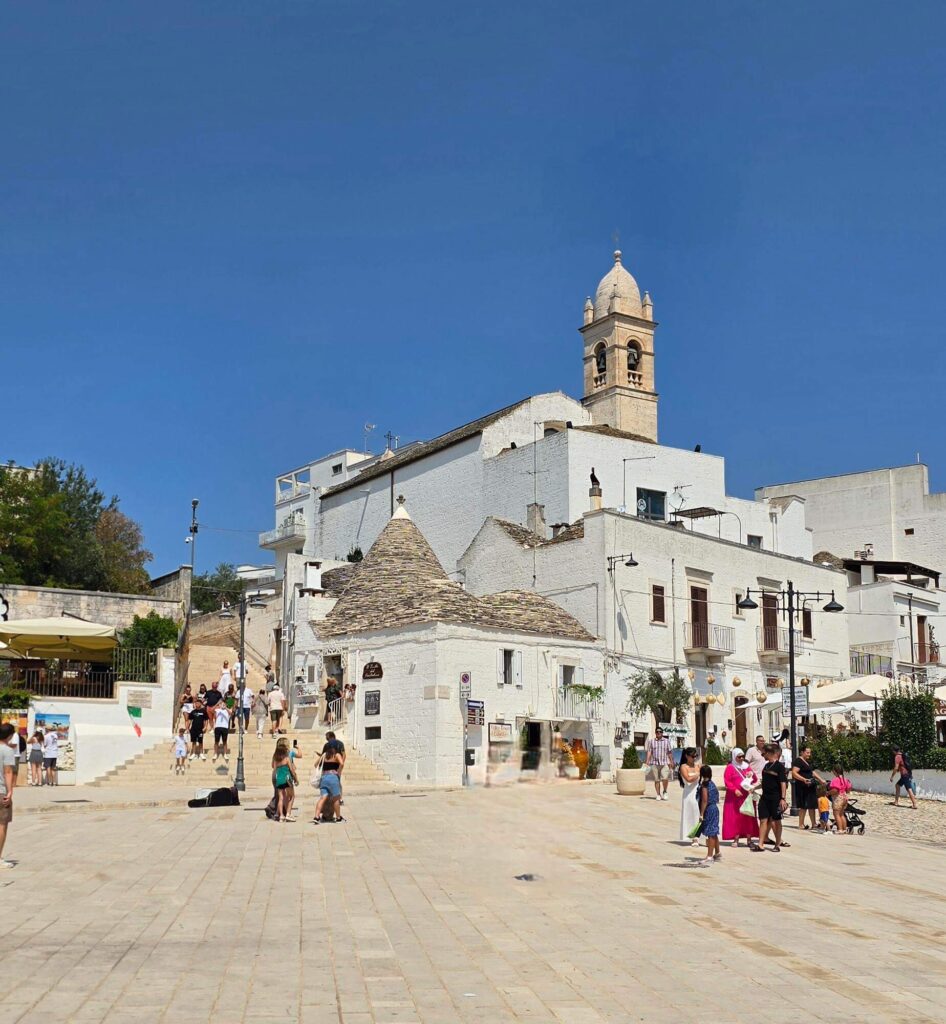
- Church of Saint Anthony of Padua: Uniquely, this church itself is built in the trullo style, complete with a conical roof. It’s a striking sight and worth a quick visit.
- Shopping for Souvenirs: Many trulli have been converted into small shops selling local crafts, olive oil, wine and trulli-themed souvenirs.
postcard from alberobello
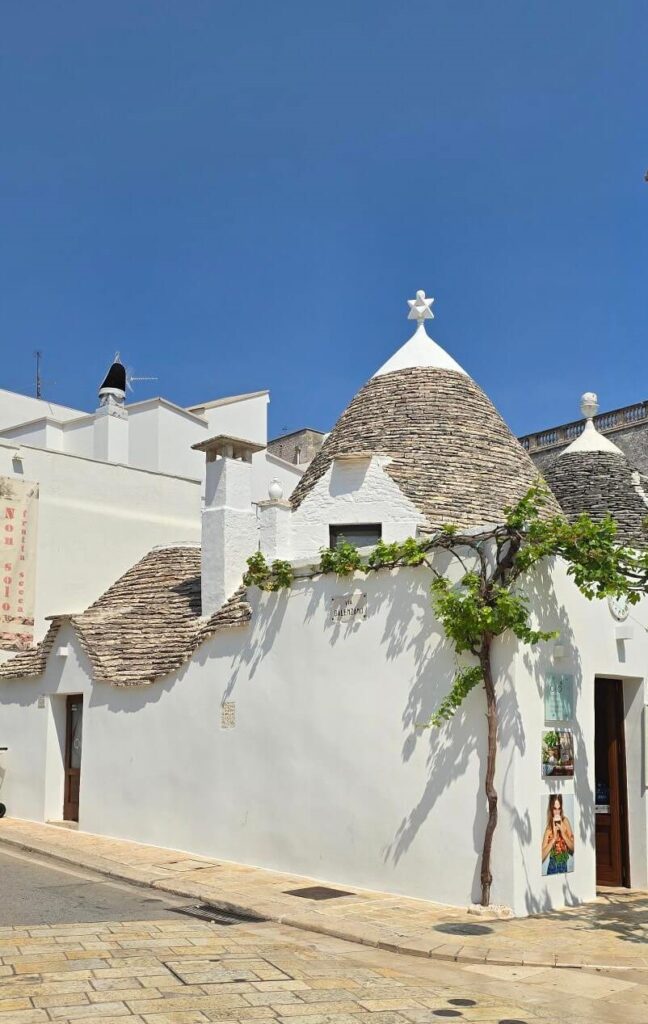
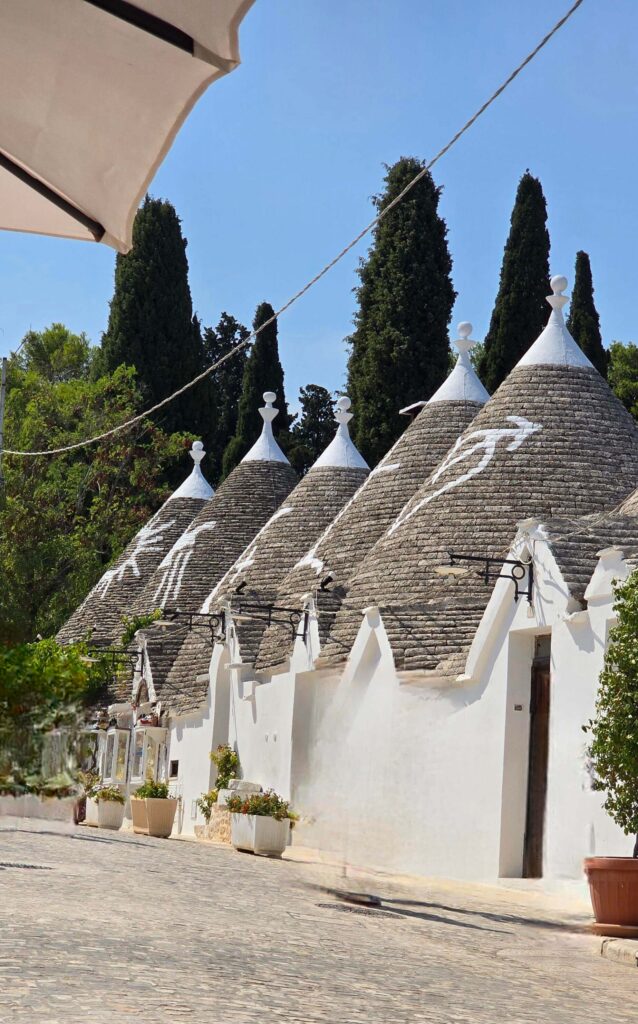
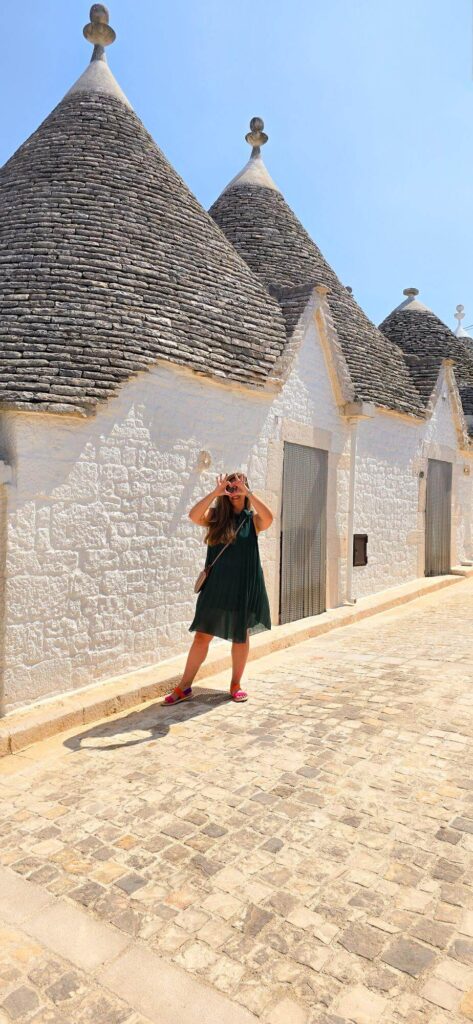
Food & Drink in Alberobello: Beyond the visual charm, Alberobello offers delightful Puglian cuisine. Look for restaurants serving local specialties like fave e cicorie (fava bean puree with chicory), fresh pasta and of course, excellent local wines from the Itria Valley. Many trulli restaurants offer a cozy, atmospheric dining experience.
Driving & Parking in Alberobello: Alberobello’s historic center is largely pedestrianized. You cannot drive directly into the trulli districts. Parking in Alberobello is easy to find, even for a day visit. Alberobello parking downtown offers a flat rate of €8 for the entire day, and the best part is that you can often park your car under a shady olive tree, keeping it cool even on the hottest days.
- Navigating: Once parked, the town is best explored on foot. Wear comfortable shoes as you’ll be walking up and down hills and on cobblestone streets.
Accommodation in Alberobello
To truly immerse yourself, consider staying in a trullo. Booking.com offers a wide range of authentic trulli accommodations. I found the Tipico Resort to offer a fantastic balance of authentic experience and reasonable price. Waking up in that cone-shaped room was like being inside a childhood dream. The thick stone walls kept everything cool even in summer heat, and falling asleep to the sound of crickets in the olive groves outside was pure magic. Also, they provide on-site parking.
Pros and Cons of Staying in Alberobello:
- Pros: Unforgettable, unique experience of sleeping in a trullo. Central location for exploring the Itria Valley. Magical atmosphere, especially in the evening when crowds thin out.
- Cons: Can be very touristy and crowded during the day, especially Rione Monti. Limited dining options compared to larger towns.
Locorotondo: The Circular White Town Gem
A short, scenic drive of just fifteen minutes from Alberobello and its famous Puglia trulli will bring you to Locorotondo, a town that instantly reveals why it holds a spot among Italy’s most beautiful villages. Its name, which means “round place,” perfectly describes its perfectly circular historic center. This unique design creates a charming labyrinth of concentric white-washed streets, each one a delight to explore.
It’s easy to lose track of time wandering through these elegant, spiraling alleys, where every turn presents a stunning new vista. The heart of the town is marked by the beautiful Chiesa Madre, with its intricate rose window, but the true magic for me lies in the stunning views. The terraced restaurants and panoramic lookouts that line the town’s perimeter offer breathtaking, sweeping views of the entire Itria Valley below, transforming every coffee or meal into a special occasion.
What to See & Do in Locorotondo:
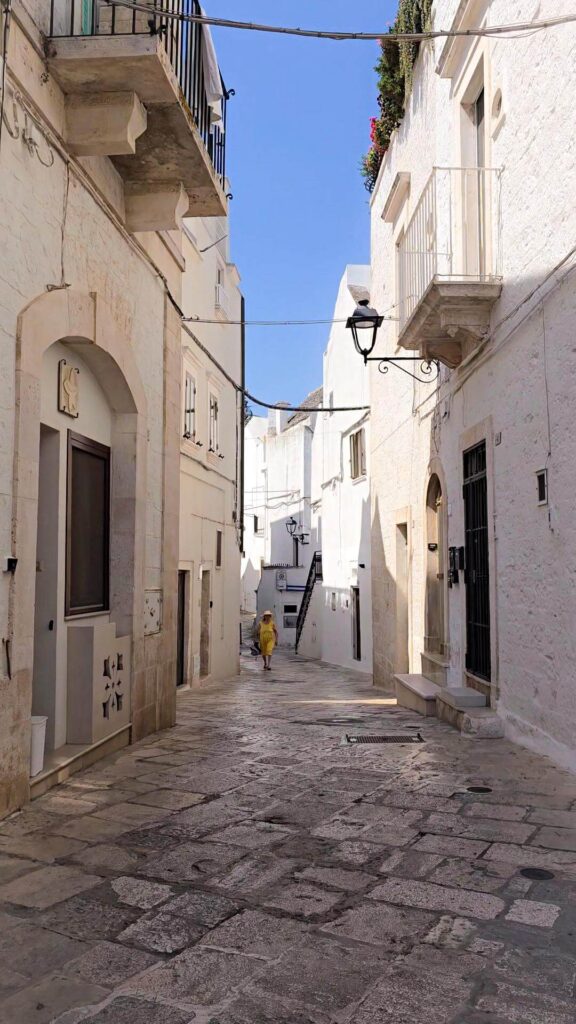
- Wander the Centro Storico: Simply get lost in the concentric circles of white-washed buildings adorned with vibrant flowers. Every corner is a photo opportunity.
- Take a Walk in the Park: Be sure to take a walk through the amazing park in the city center. From here, you can enjoy stunning views of the entire Itria Valley, including a special vantage point of Alberobello in the distance. During the summer, you’ll often find street musicians playing, providing a beautiful soundtrack for your stroll.
- Chiesa Madre di San Giorgio: Admire the imposing main church with its beautiful facade and intricate rose window.
- Belvedere: Find the panoramic viewpoints that offer sweeping vistas of the surrounding Itria Valley, dotted with trulli and olive groves.
- Local Crafts & Boutiques: Discover small shops selling local pottery, textiles, and gourmet products.
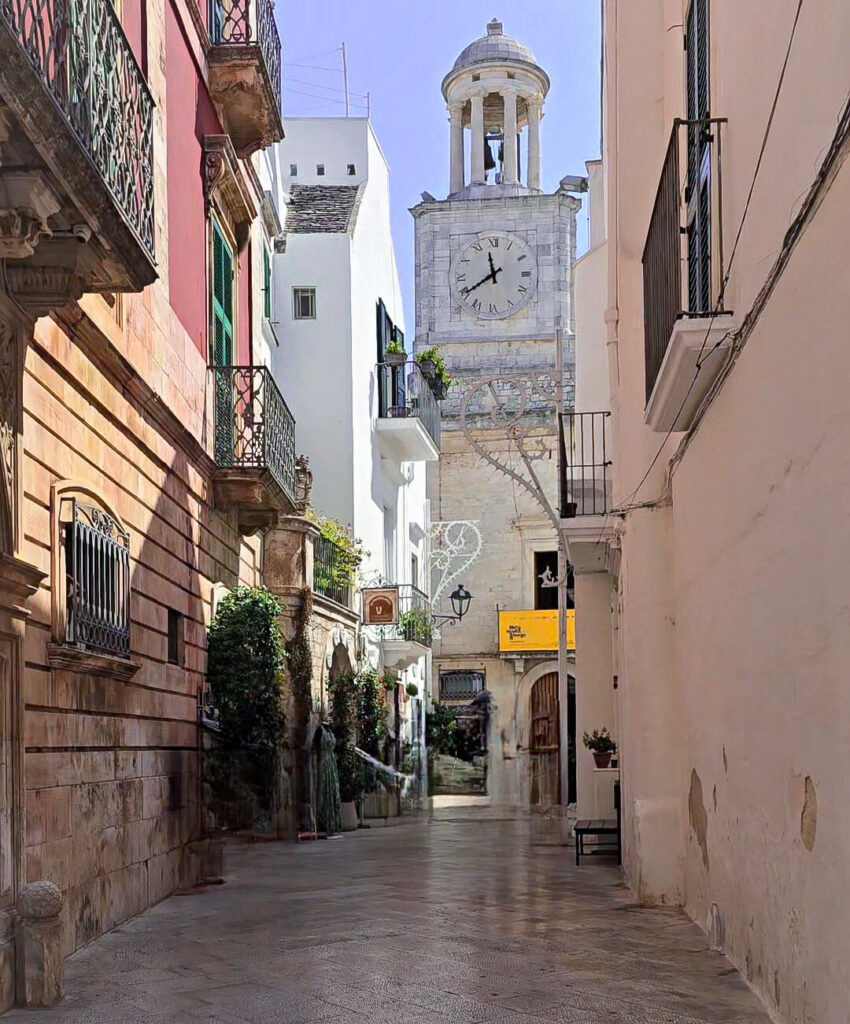
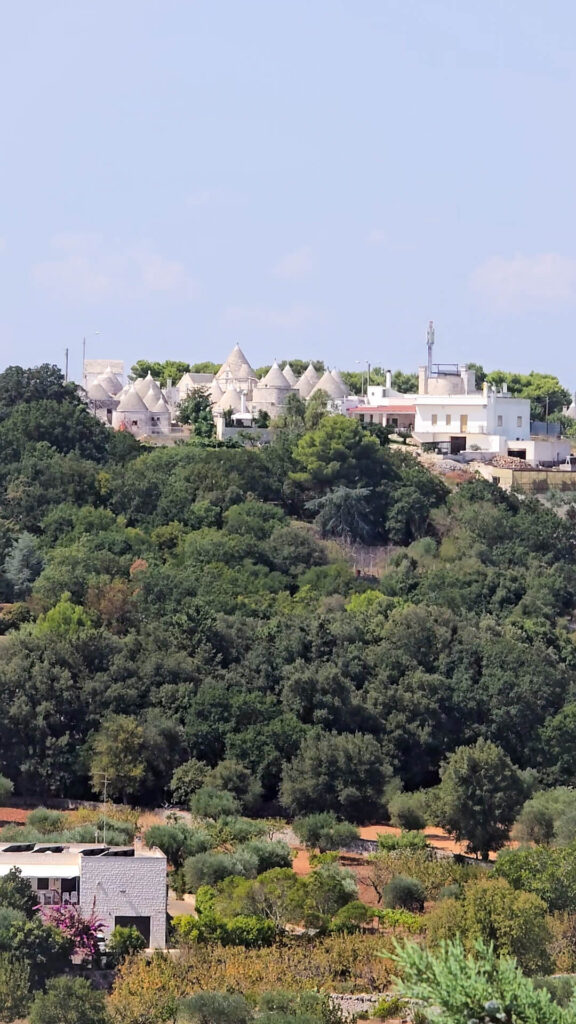
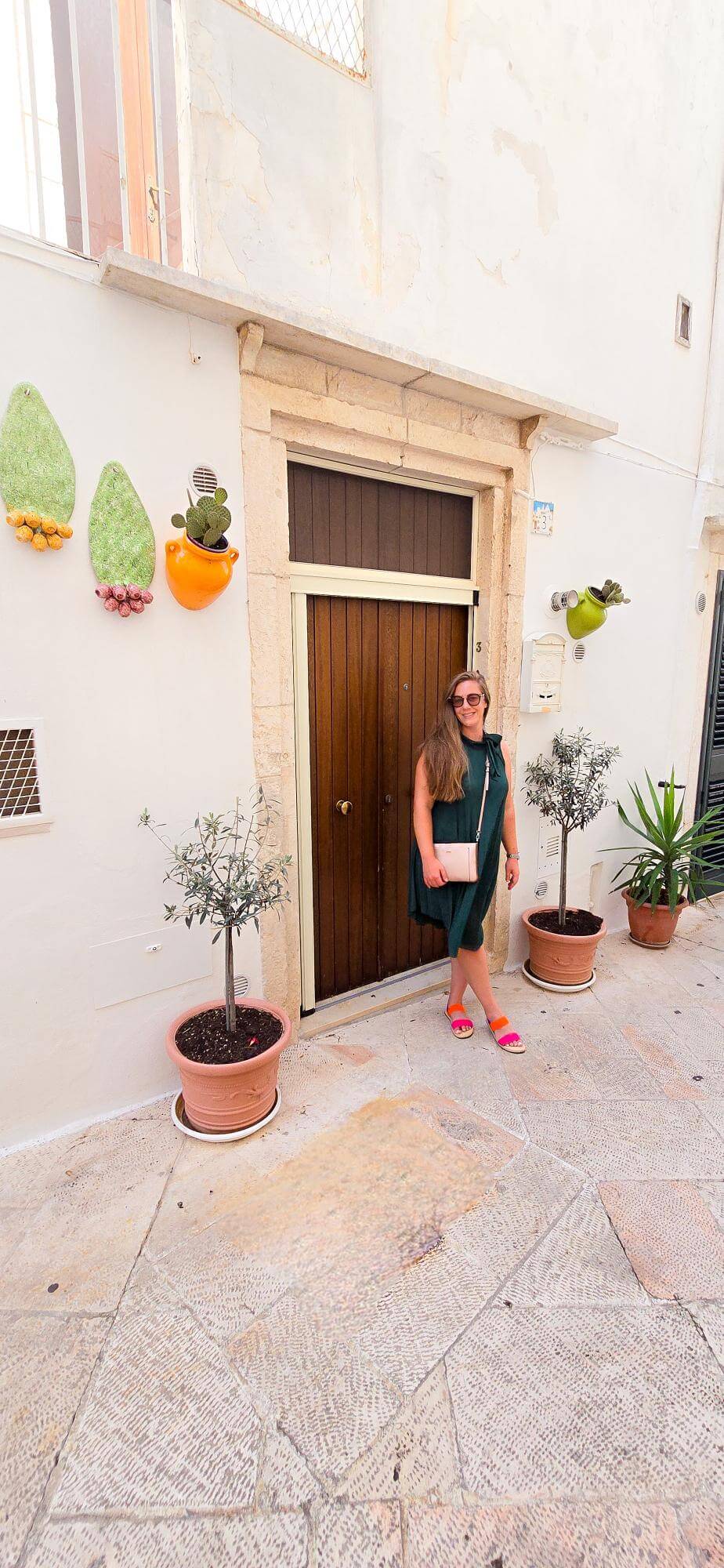
Locorotondo Vibes
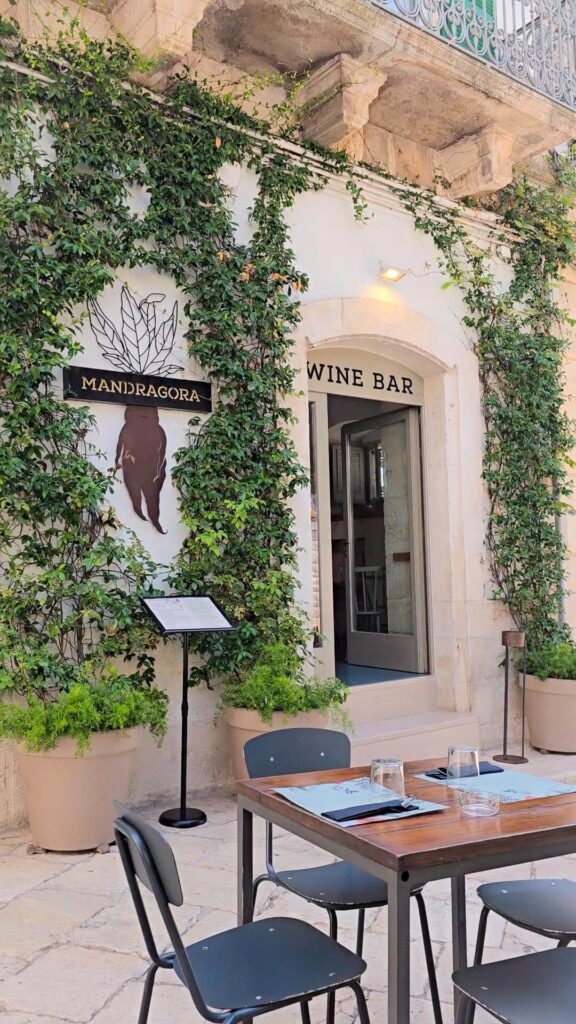
Accommodation in Locorotondo: While fewer hotels are directly within the historic center, charming B&Bs and apartments are available. Booking.com can help you find options that offer a more intimate experience.
Food & Drink in Locorotondo: Locorotondo is known for its excellent white wine, Locorotondo DOC. Be sure to try it with local cheeses and cured meats, especially the famous capocollo from Martina Franca. The terraced restaurants are perfect for an evening meal with a view.
Driving & Parking in Locorotondo: Like most historic centers in Puglia, Locorotondo’s old town is a ZTL (Limited Traffic Zone), meaning you cannot drive inside.
- Parking: There are several paid parking lots just outside the walls, usually within a 5-10 minute walk of the center. Look for “Parcheggio” signs. Street parking in the newer areas around the historic center can also be found. If you find a spot on the street, you will pay around 1 EUR for an hour, which is perfect if you are planning to stay just for a quick visit.
- Navigating: The town is small enough to explore entirely on foot.
Pros and Cons of Staying in Locorotondo:
- Pros: Incredibly picturesque and charming, less crowded than Alberobello, stunning panoramic views of the Itria Valley, excellent local wine.
- Cons: Limited nightlife compared to larger towns, can feel very quiet in the evenings, fewer accommodation options directly within the historic center.
Martina Franca: Baroque Elegance in a Puglia White Town
Just a 15-minute drive from Locorotondo, you’ll find Martina Franca, a town that offers a striking contrast to its trulli-filled neighbor. Martina Franca is a sophisticated baroque masterpiece, often overlooked by tourists rushing to Alberobello, making it a truly rewarding stop for those seeking elegance, history and exceptional cuisine without the crowds.
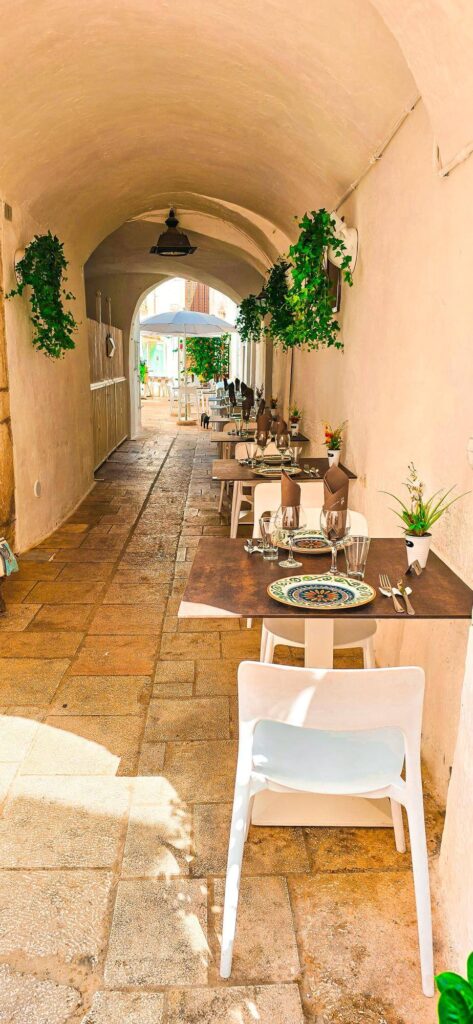
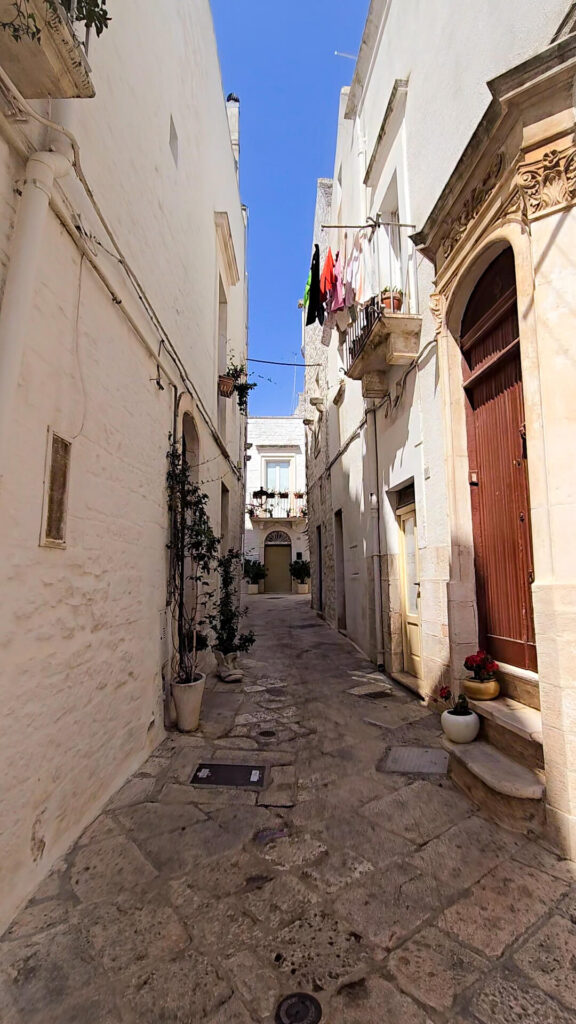
Its historic center is a maze of narrow, winding streets that suddenly open up into grand piazzas dominated by ornate palaces and churches. The atmosphere here is refined, with a strong local feel.
What to See & Do in Martina Franca
- Palazzo Ducale: The highlight of the town, this magnificent Ducal Palace boasts lavish frescoes, grand halls, and a beautiful courtyard. It’s a stunning example of Baroque architecture and a must-visit.
- Basilica di San Martino: Located in Piazza Plebiscito, this impressive Baroque church features an incredibly ornate facade and a rich, gilded interior.
- Piazza Plebiscito & Piazza Roma: These are the main squares, perfect for people-watching, enjoying a coffee and admiring the surrounding architecture.
- Wander the Centro Storico: Lose yourself in the charming alleys, discovering hidden courtyards, artisan shops and elegant doorways.
- Opera Festival: Martina Franca hosts the prestigious “Festival della Valle d’Itria” (Itria Valley Festival) in July and August, attracting opera lovers from around the world.
Accommodation in Martina Franca
Martina Franca offers a range of elegant hotels and charming B&Bs, often at more reasonable prices than the more tourist-heavy towns. Booking.com can help you find suitable options, many with parking facilities.
Food & Drink in Martina Franca
Martina Franca is renowned for its gastronomic heritage, especially its cured meats.
- Capocollo di Martina Franca: This is a famous cured pork product, a true local delicacy. Be sure to try it at a local deli or restaurant.
- Bombette: While also found in Ceglie Messapica, Martina Franca has its own excellent versions of these grilled meat rolls.
- Local Wines: The area produces excellent wines, both red and white.
Driving & Parking in Martina Franca
Martina Franca’s historic center is a ZTL.
- Parking: There are several large, well-marked paid parking lots just outside the city walls, making it relatively easy to park. From these lots, it’s a short, pleasant walk into the old town. I parked HERE.
- Navigating: The old town is entirely walkable, and its elegant streets are a pleasure to explore on foot.
Pros and Cons of Staying in Martina Franca:
- Pros: Elegant Baroque architecture, authentic local atmosphere with fewer tourists, excellent gastronomic scene (especially cured meats), good base for exploring the Itria Valley, easier parking than Polignano or Alberobello.
- Cons: Not as “iconic” as Alberobello’s trulli or Polignano’s cliffs, less focused on beach access (though beaches are a drive away).
Connecting the Gems of the Puglia Itria Valley
The beauty of exploring Alberobello, Locorotondo and Martina Franca by car is their close proximity, forming a perfect “triangle” for easy day trips or a multi-stop itinerary.
- Alberobello to Locorotondo: ~15 minutes (10 km)
- Locorotondo to Martina Franca: ~15 minutes (10 km)
- Martina Franca to Alberobello: ~20 minutes (15 km)
This allows you to visit two or even all three towns in a single day, or to base yourself in one and take short, scenic drives to the others. The roads connecting them are generally well-maintained and offer picturesque views of the rolling countryside, olive groves, and scattered trulli.
Conclusion: The Enchanting Heart of Puglia Awaits
The Itria Valley is truly the enchanting heart of Puglia, offering a unique blend of fairy-tale architecture, authentic local life, and sophisticated charm. Exploring Alberobello’s whimsical trulli, wandering the circular streets of Locorotondo and admiring the baroque elegance of Martina Franca by car allows for an immersive and flexible adventure.
This region rewards curiosity and spontaneity, inviting you to discover its secrets at your own pace. So, get ready to dive into the magic of the Itria Valley – a place that will undoubtedly capture your heart.
Stay tuned for the next installment of our Puglia series, where we’ll venture further south to explore the Baroque splendor of Lecce and the ancient wonders of Matera!