Matera Travel Guide: A Journey Through Time
I had heard about Matera’s surreal beauty long before I visited, but nothing prepared me for the feeling of walking through its stone alleys — like stepping straight into another century. While previous guides have taken you through the enchanting towns and coastal beauty of Puglia, there’s one extraordinary destination that stands alone, demanding its own spotlight: Matera.
This Matera travel guide will help you uncover its secrets. Though often visited by those exploring Puglia due to its close proximity to Bari, Matera is actually located in the neighboring region of Basilicata. This ancient city is a story in itself, a place where history isn’t just preserved, but lived and breathed through its incredible cave dwellings.
Often described as one of the oldest continuously inhabited settlements in the world, Matera offers an unparalleled journey back in time. Its unique “Sassi” (ancient cave dwellings) are a UNESCO World Heritage site and a European Capital of Culture, drawing visitors from across the globe to witness its dramatic beauty and profound history. It’s important to note that while the Sassi are Matera’s ancient heart, there’s also a modern part of the city, much like any other Italian town, which you’ll pass through on your way to the historic cave districts.
Matera History: From Cave Dwellings to Cultural Capital
Matera’s history is as layered as its ancient stone dwellings. For millennia, people lived in the natural caves carved into the soft tufa rock, transforming them into homes, churches, and even entire neighborhoods. These “Sassi” (meaning “stones”) represent a unique example of human settlement, adapted perfectly to the natural environment.
However, by the mid-20th century, the Sassi had become a symbol of poverty and neglect, with inhabitants living in dire conditions without proper sanitation or electricity. In the 1950s, the Italian government forcibly relocated the residents to modern housing. For decades, the Sassi lay abandoned, a ghost town.
But Matera’s story didn’t end there. In a remarkable transformation, the Sassi began to be re-inhabited and restored, not just as homes, but as hotels, restaurants, and cultural spaces. This extraordinary revival led to its recognition as a UNESCO World Heritage site in 1993 and, famously, as the European Capital of Culture in 2019. Today, Matera stands as a powerful testament to human resilience and a living museum of ancient life, offering visitors a chance to walk through history. This Matera Travel Guide delves deep into this fascinating past.
Today, the Sassi di Matera are a masterpiece of sustainable architecture and history, attracting travelers, filmmakers and dreamers from around the world.
Getting to Matera: A Scenic Drive from Puglia
When I drove from the Itria Valley, particularly from a town like Alberobello, my journey to Matera was incredibly pleasant. I found the roads to be well-maintained and easy to navigate, with absolutely no tolls to worry about. As I drove, I saw picturesque landscapes filled with vibrant green fields and endless olive groves, making the hour-long trip a truly beautiful part of my overall Puglia adventure. This section of our Matera Travel Guide ensures a smooth arrival.
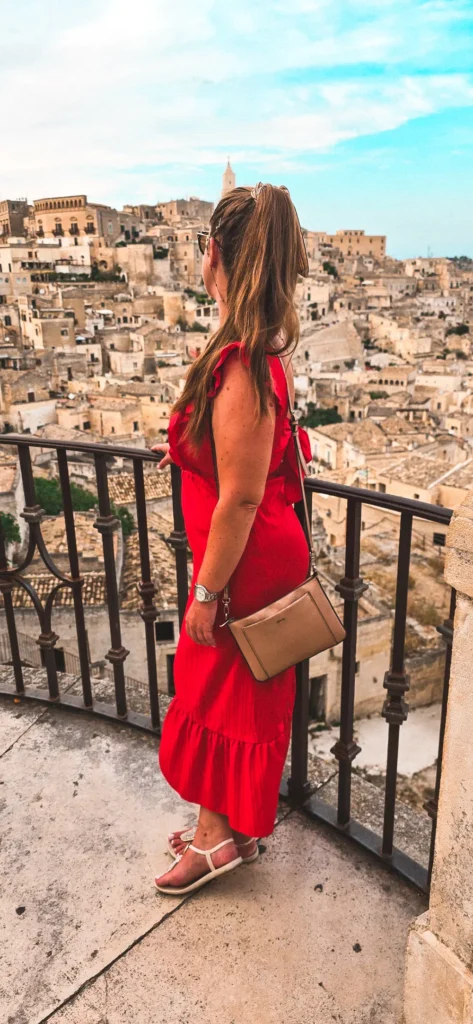
Where to Stay in Matera: Sleep in a Cave!
To truly immerse yourself in Matera’s unique atmosphere, there’s no better experience than staying in a renovated cave dwelling. Many of these ancient homes have been transformed into luxurious and atmospheric hotels and B&Bs. Our Matera Travel Guide recommends this unique experience.
To truly feel Matera’s magic, stay in a cave hotel. These restored dwellings mix ancient stone walls with luxury comforts. My top pick: Il Belvedere Hotel – it’s as dreamy as it sounds, with cave rooms, amazing views, and breakfast worth waking up early for. This hotel offers stunning views of the Sassi, beautifully appointed cave rooms that blend historic charm with modern comfort, and an exceptional breakfast. It’s the perfect base from which to explore the city.
Other great options include La Casa di Gianni with free parking and Gradelle Pennino with an amazing terrace view and also free parking.
Matera Parking – Where to Leave Your Car (for Day Visitors)
Matera’s Sassi are largely pedestrianized, and driving within the ancient districts is restricted. For day visitors, it’s essential to park outside the Sassi and explore on foot. This Matera Travel Guide provides practical parking advice.
- Paid Parking Lots: There are several well-marked paid parking lots located just outside the historic center. Look for signs pointing to “Parcheggio Sassi” or similar. These are typically located along the new town’s perimeter, offering relatively easy access to the Sassi.
- Street Parking: Some street parking (blue lines) might be available in the newer parts of Matera, but it can be harder to find, especially during peak season.
- Navigating: Once parked, be prepared to walk! Matera is a city of stairs, slopes, and winding paths. Wear comfortable shoes and embrace the journey.
Planning to explore more of southern Italy by car? Check out my Puglia road trip guide.
Things to Do in Matera
Exploring Matera is an experience in itself, but here are some must-see attractions:
- The Sassi: Simply wander. Get lost in the labyrinthine alleys, climb the ancient steps, and discover hidden courtyards. Every turn offers a new perspective on this incredible city.
- Casa Grotta di Vico Solitario: Visit a reconstructed cave-dwelling home to understand how families lived in the Sassi before their relocation. It offers a poignant glimpse into the past.
- Cattedrale di Matera: Perched on the highest point between the two Sassi (Sasso Barisano and Sasso Caveoso), the Romanesque Cathedral offers magnificent views of the city.
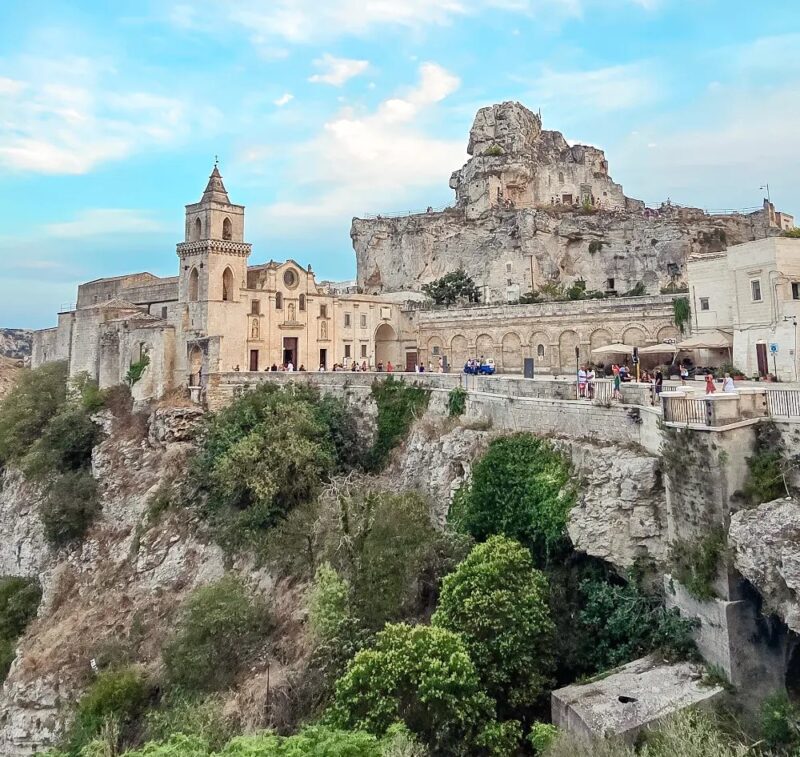
- Chiese Rupestri (Rock Churches): Matera is home to over 150 rock churches, many with ancient frescoes. Some are easily accessible, while others require a guided tour to reach. The Church of Santa Maria de Idris is particularly striking, carved into a rock spur overlooking the Sassi.
- Palombaro Lungo: An impressive underground cistern system that once supplied water to the city. A guided tour of this “underground cathedral” is a fascinating experience.
- MUSMA (Museum of Contemporary Sculpture of Matera): A unique museum housed within a cave complex, showcasing contemporary sculpture.
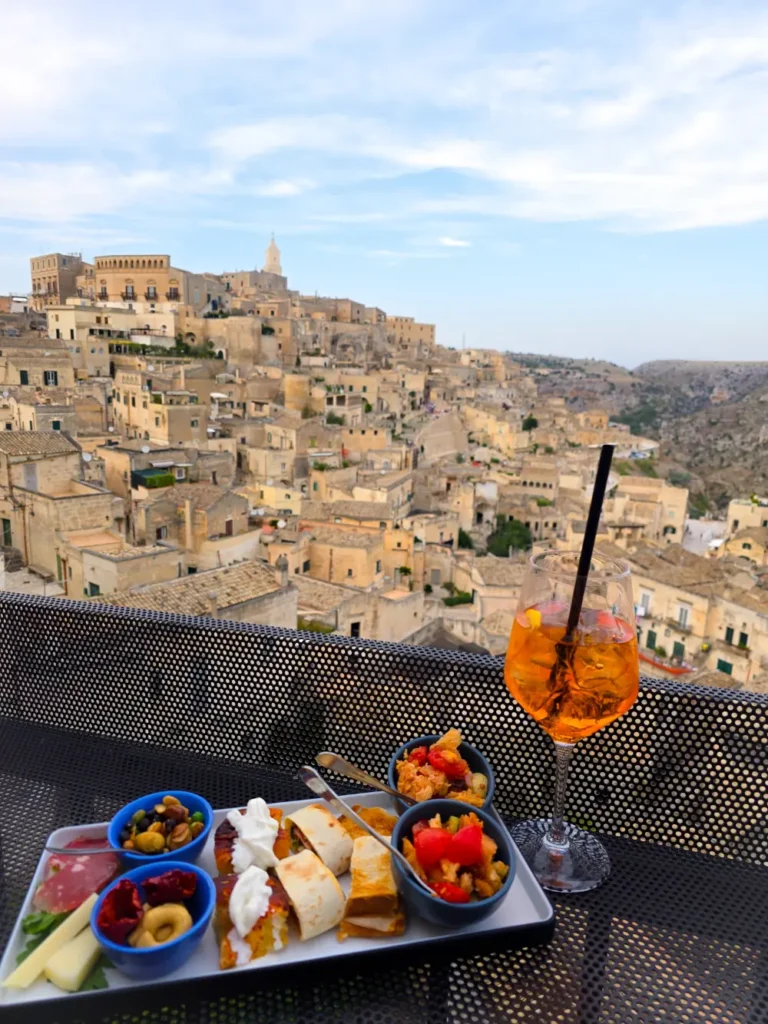
Matera Food and Drink: Culinary Delights with a View
Matera’s culinary scene has flourished with its revival, offering traditional Basilicatan dishes in atmospheric settings.
- Traditional Dishes: Don’t miss local pasta like orecchiette (though more Puglian, it’s common here too) or strascinati, often served with local vegetables or rich meat sauces. Matera bread, with its distinctive shape and crispy crust, is also famous.
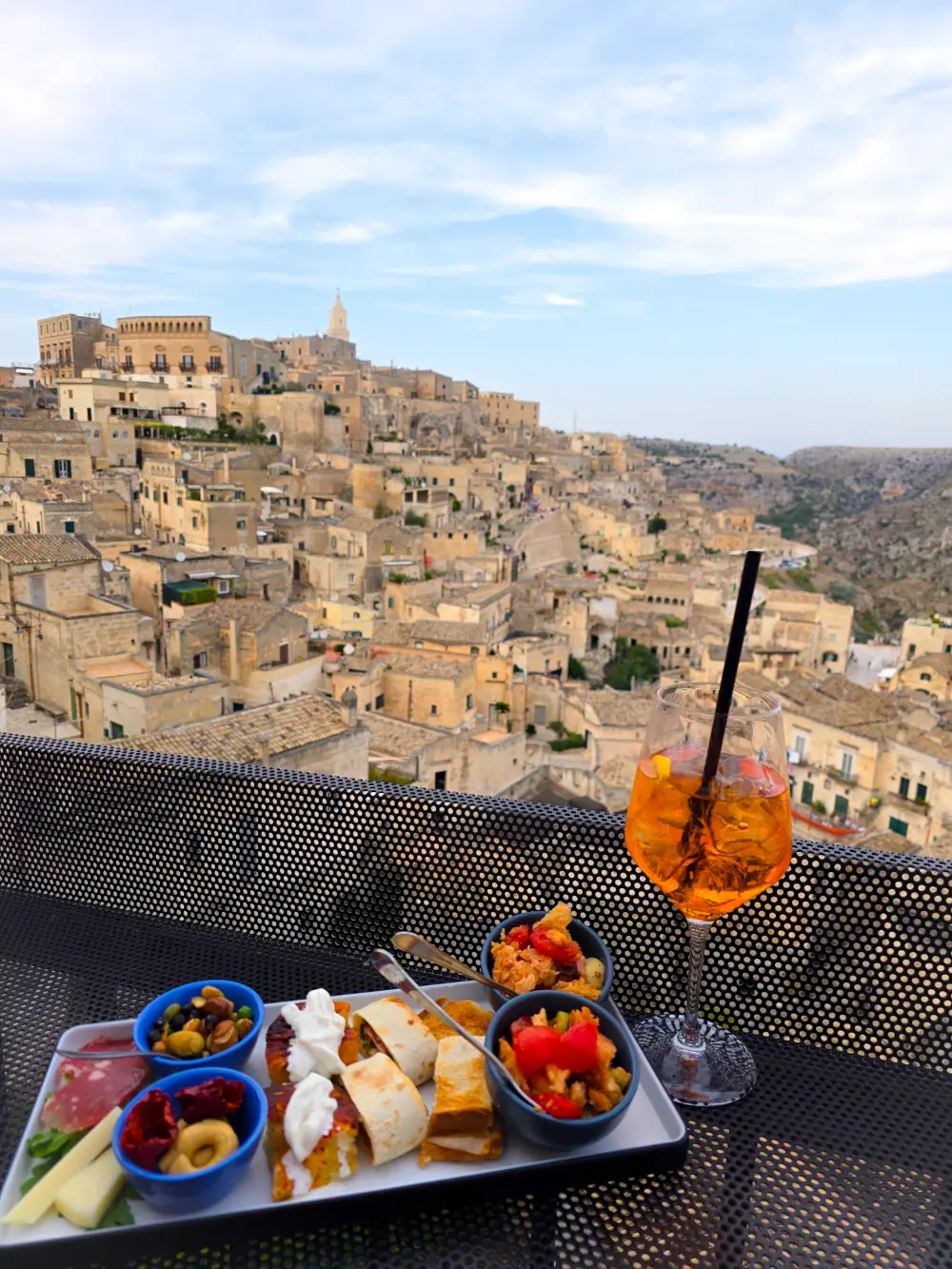
- Sunset Spots with Amazing Views: Matera truly comes alive at sunset as the Sassi glow golden. Many restaurants and bars offer incredible panoramic views:
- Area around Piazza Vittorio Veneto: Offers elevated views, particularly from the terrace near the Chiesa di San Pietro Caveoso.
- Restaurants in Sasso Caveoso: Many eateries are built into the caves themselves, offering intimate dining experiences with windows or terraces overlooking the dramatic landscape. Look for places with “vista sui Sassi” (view of the Sassi).
- Belvedere di Murgia Timone: For the most breathtaking, classic panoramic view of Matera, head across the gorge to this viewpoint. It’s especially stunning at sunset when the lights of the Sassi begin to twinkle.
- Terrazza Cavaliere: This is arguably Matera’s most Instagrammable spot, offering unparalleled panoramic views of the Sassi, perfect for capturing that golden hour glow.
The Matera Optical Illusion: Closer Than It Seems, Easier Than It Looks
One of the most fascinating aspects of Matera is the optical illusion created by its unique topography. As you look across the Sassi, the distances between buildings and different levels can seem vast and daunting, making it appear as though a walk across town would take hours. However, in reality, Matera is incredibly walkable. What looks like a long, winding journey is often just a few minutes on foot, thanks to cleverly designed staircases, shortcuts, and interconnected pathways. Embrace the climbs and descents, and you’ll quickly find yourself navigating the city with surprising ease. This Matera Travel Guide encourages you to explore every corner.
Matera at Night — When the Magic Truly Begins
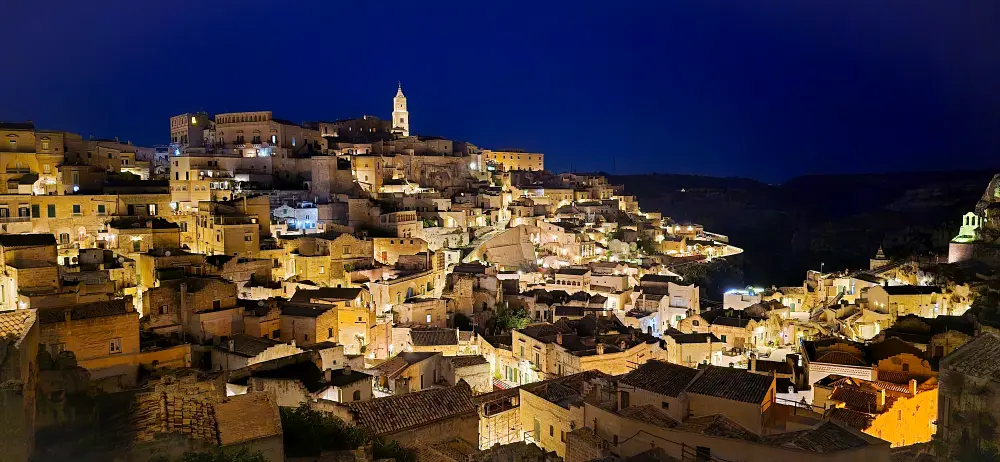
When the sun dips behind the hills and the day-trippers return to Bari or Alberobello, Matera transforms into something truly enchanting. The soft golden lights begin to flicker across the stone facades, turning the Sassi into a glowing labyrinth suspended in time. The air grows quieter, footsteps echo off the cobbled streets, and the scent of wood-fired dinners drifts from cave restaurants. This is when Matera reveals its most intimate side — peaceful, cinematic, and almost otherworldly. Take an evening stroll through Sasso Caveoso or watch the city light up from the Belvedere di Murgia Timone viewpoint. It’s a moment that stays with you long after you’ve left.
Conclusion: Matera, An Unforgettable Experience
Matera is more than just a city; it’s an experience, a living testament to human history and resilience. Its ancient Sassi, transformed from dwellings of hardship to symbols of beauty and culture, offer a profound journey that will stay with you long after you leave. When night falls, Matera becomes truly stunning as all the lights illuminate the Sassi, creating a magical, almost ethereal glow. This is when the day visitors leave, and the city reveals a quieter, more intimate charm. If you have the time, I highly recommend staying at least one night in this magical town to fully immerse yourself in its unique evening atmosphere. Whether you’re exploring its cave churches, enjoying dinner with a view, or watching the Sassi glow under the night sky — Matera promises a journey you’ll never forget. We hope this Matera Travel Guide helps you plan your perfect trip.
If you loved Matera, read my Puglia by Car guides or if some of your next stops is Lisbon, I have full Lisbon Travel Guide wrote from my experience.
See you in the next article.