10 Best Things to Do: The Ultimate Tbilisi Travel Guide 2026
Tbilisi is not a city you can understand from a window seat. It is a sensory experience that requires you to get your boots dusty on the cobblestones of Sololaki, to feel the sulfurous steam of the ancient baths on your skin, and to sit in a dimly lit wine cellar listening to the history of a grape that has been grown for eight millennia. If you are looking for a sterile, tourist-trap itinerary, this isn’t it. This Tbilisi Travel Guide is born from my own journey across Georgia—starting from that first “lesson learned” moment in Kutaisi (you can catch up on my How to get from Kutaisi to Tbilisi guide if you’re coming from the west) to finding a home in the hills of Avlabari.
The Arrival: Navigating the Chaos with Ease
Landing at Shota Rustaveli Airport at 3:00 AM is a classic Georgian rite of passage. The arrivals hall will be a sea of taxi drivers offering you “special prices” to the center. My advice? Smile, keep walking and open your phone.
In 2026, the Bolt app remains the undisputed king of transport here. But there’s a catch: you need data the second you land. While the airport has physical SIM kiosks, the queues can be demoralizing. I switched to using the Yesim eSIM before I even left home. It activated the moment we touched down, allowing me to order a Bolt while other passengers were still standing in line. A ride to the city center should cost you between 35 and 45 GEL (11–15 EUR), and it’s a door-to-door service that saves you the stress of haggling. All you need is the app and a connected bank card.
Road Sips Tip: Use my Yesim offer to grab your data plan ahead of time and use code FALLY20 on your first purchase for 20% discount.; it’s one less thing to worry about when you’re bleary-eyed at baggage claim.
The Cash vs. Card Debate: Navigating Money in Tbilisi
One of the most frequent questions I get in any Tbilisi Travel Guide is: “Do I actually need cash?”
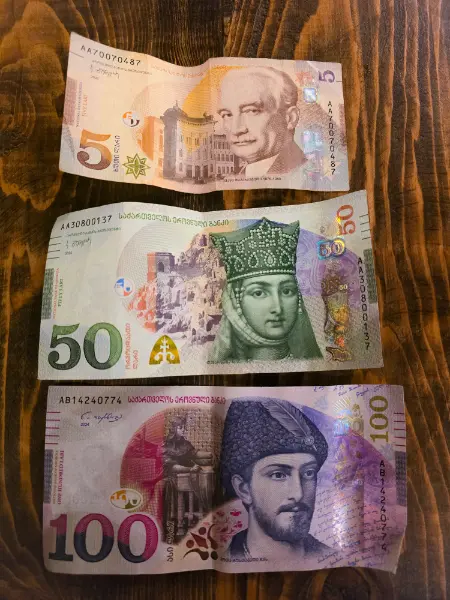
The short answer is: mostly no, but occasionally yes. Tbilisi is surprisingly tech-forward. From the hippest cafes in Vake to the smallest grocery stores in Avlabari, contactless payment is the standard. You can tap your card for the metro, your Bolt ride, and your Khachapuri. However, Georgia is still a place where the “local touch” matters. If you want to buy a hand-knitted pair of socks at the Dry Bridge Market, grab a fresh pomegranate juice from a street vendor or tip your mountain guide on one of the many day tours from Tbilisi, you will need Georgian Lari (GEL) in your pocket.
Finding a Fair Exchange Rate
You will see “Currency Exchange” signs on almost every corner in the Old Town. While most are legitimate, the rates can vary wildly. My rule of thumb? Avoid exchanging large amounts at the airport—the rates there are rarely in your favor.
Instead, wait until you get into the city. Most exchange offices in the center offer a very fair rate with no hidden commissions. If you find yourself near the heart of the tourist district, look for the exchange spots near Meidan Bazaar. I’ve pinned a specific office nn my Tbilisi Map that consistently offers some of the best rates in the city without the “tourist tax.”
Where to Sleep: Best Areas to Stay in Tbilisi
Choosing your neighborhood is the most important decision you’ll make. Most people instinctively look for hotels near Freedom Square, thinking it’s the most convenient. While that area is grand and full of life, it’s also the loudest part of the city, and if you are planning to rent a car, it is a logistical nightmare.
The Avlabari Advantage: Authenticity and Easy Parking
When researching the best areas to stay in Tbilisi, we kept coming back to Avlabari. It’s one of the oldest inhabited parts of the city, perched on the left bank of the river. It feels like a village tucked inside a capital.
We stayed at the Boutique Hotel Mimino, and it was the smartest move of the trip. The hotel is located literally one street below the Sameba (Holy Trinity) Cathedral. Staying here meant that our “morning view” was the golden dome of the largest church in Georgia.
But for those of us who travel with a vehicle—perhaps you’ve followed my guide and rented a car in Georgia —Avlabari offers something the city center simply cannot: space. Hotel Mimino provides plenty of free parking, which is a rare treasure in Tbilisi. We could leave the car safely, walk 10 minutes across the bridge into the Old Town, and never have to worry about a “tow-away” zone.
The Soul of the City: 10 Best Things to Do in Tbilisi
1. The Morning Ritual at Sameba Cathedral
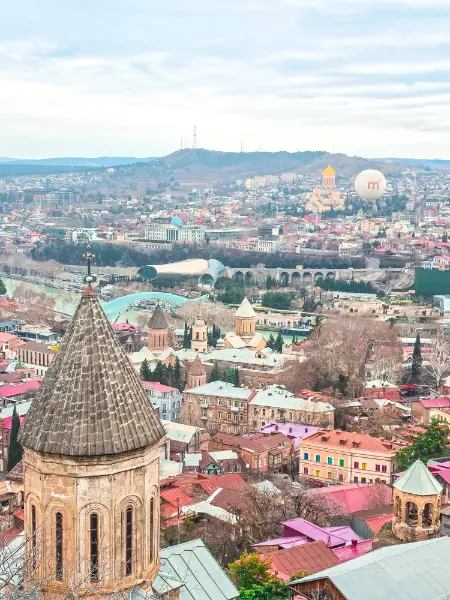
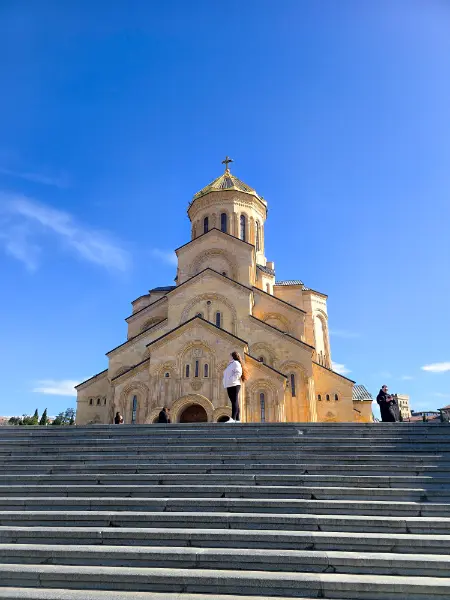
Because we stayed in Avlabari, the Holy Trinity Cathedral (Sameba) became our local landmark. It’s more than just a church; it’s a symbol of Georgia’s post-Soviet revival. Completed in 2004 to commemorate 2,000 years of Christianity, it dominates the skyline. Walk there early, before the tour buses arrive. The scale is staggering—the main dome reaches 87 meters—but the real magic is in the gardens. You’ll see locals filling bottles with holy water and the sound of polyphonic chanting echoing from the stone walls.
If you can, visit on a Sunday morning to attend the liturgy. The energy inside at that moment is something I truly cannot describe in words—the atmospheric polyphonic chanting, the flickering candles, and the devotion of the locals create a feeling you simply have to experience for yourself. Even if you aren’t religious, the weight of the moment is undeniable.
2. Steaming History at the Abanotubani Sulfur Baths
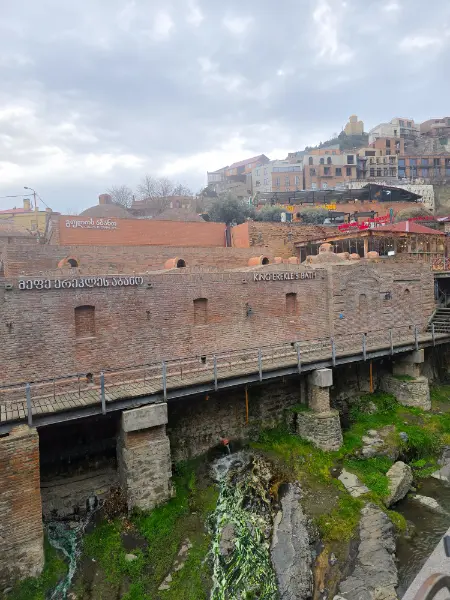
You’ll smell it before you see it—the unmistakable scent of sulfur. These brick-domed bathhouses are where Tbilisi was born. Legend says King Gorgasali founded the city after his falcon fell into the hot springs.
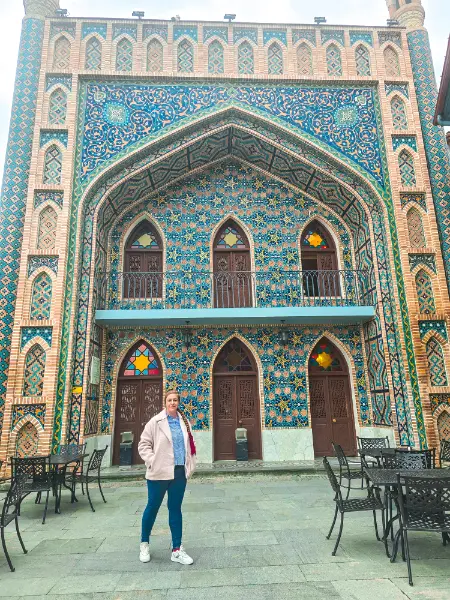
Don’t just take a photo of the Orbeliani Bathhouse (the blue mosaic one). Book a private room in one of the older, stone-walled baths like Gulo’s or Royal Baths. Ask for a “Kisa” (scrub). A local will come in and scrub layers of travel dust off your skin. It’s the ultimate way to reset for about 20–50 GEL (6-16 EUR) for the scrub service.
- A Note on Safety: While these baths are world-famous, it is important to know that hot tubs and sulfur baths are generally not recommended for pregnant women. Since we were traveling during my pregnancy, we unfortunately had to skip the experience from the inside this time. However, the district is still a must-visit just to admire the architecture and the famous blue-tiled Orbeliani Bathhouse.
3. Treasure Hunting at the Dry Bridge Market or Bazari Orbeliani
If you like stories, you belong at the Dry Bridge. This open-air flea market is where history is sold in pieces. You’ll find Soviet-era medals, vintage Zenit cameras, hand-painted icons, and piles of old vinyl records. Strike up a conversation with the vendors; many are selling family relics and have incredible stories to tell about life in the 70s. It’s the best place for unique, non-generic souvenirs.
But if your version of “treasure” is more culinary, you need to visit the opposite: Bazari Orbeliani.
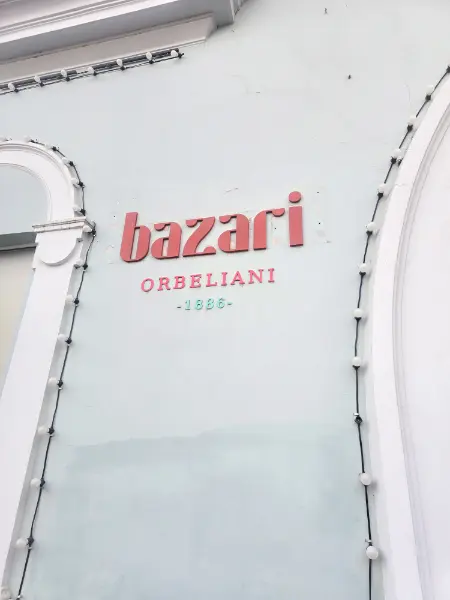
The Modern Market: While the Dry Bridge is for antiques, Bazari Orbeliani is a beautifully renovated food hall. Here, they sell the finest Georgian artisanal products—everything from high-end cheeses and spices to local wines and sweets. It’s the perfect place to see the modern, sophisticated side of Georgian food culture.
4. The Vertical Journey: Narikala & The Mother of Georgia
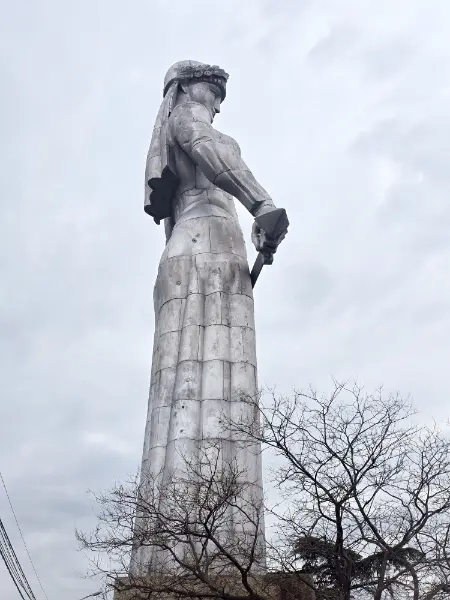
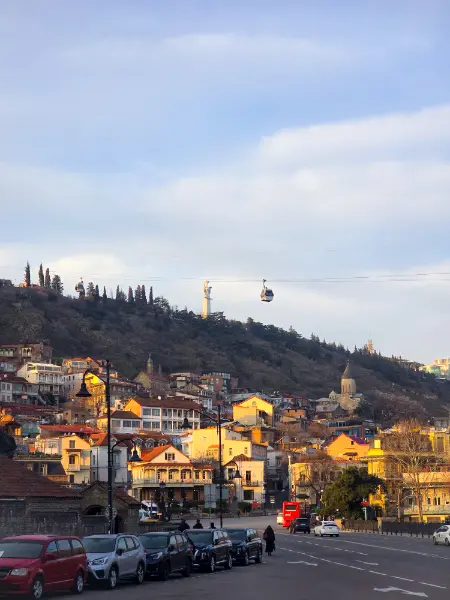
Skip the steep hike and take the cable car from Rike Park. It costs about 2.5 GEL (0.80 EUR) and gives you a bird’s-eye view of the Kura river. At the top, you’ll meet Kartlis Deda (Mother of Georgia). Standing 20 meters tall, she holds a bowl of wine for friends and a sword for enemies. From here, follow the ridge to the Narikala Fortress, which has stood since the 4th century, offering the best sunset views in the city.
Important Update: Please note that at this moment, the Narikala Fortress is closed for renovation, so you cannot explore the interior of the ruins. However, it is still 100% worth the trip up.
5. The Creative Pulse of Fabrika
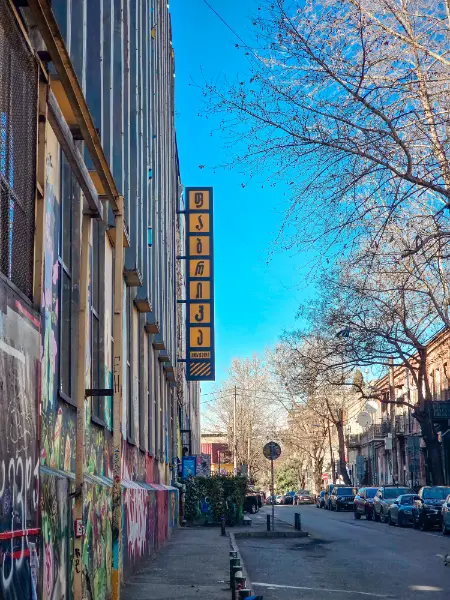
To see where the “New Tbilisi” lives, you have to cross the river to the Chugureti district to find Fabrika. This used to be a Soviet sewing factory, but today it’s a sprawling courtyard of street art, ramen shops and co-working spaces. It’s the best place in the city to grab a craft beer and people-watch. It shows that Tbilisi isn’t just about ancient history; it’s a city that is actively reinventing its youth culture.
Chugureti neighborhood is one of the most charismatic in Tbilisi, filled with 19th-century architecture and a burgeoning “hipster” vibe. Walking here feels like discovering a secret side of the city that is both gritty and incredibly artistic.
6. The Whimsical Leaning Clock Tower
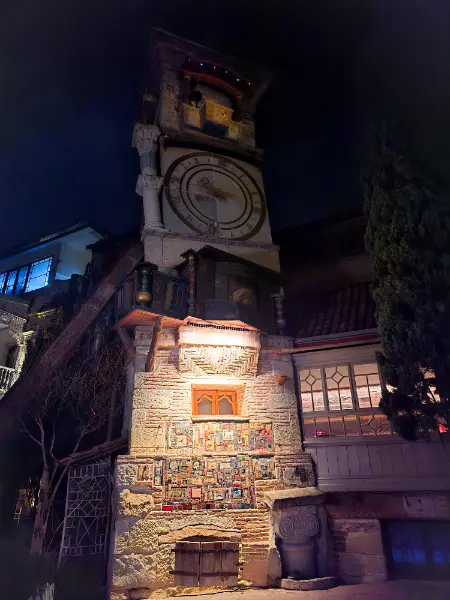
Hidden in the side streets of the Old Town is the Gabriadze Theater Clock Tower. It looks like something out of a fairy tale, held together by a single iron beam. Every hour, an angel comes out to strike the bell, and at noon and 7:00 PM, a small puppet show called “The Circle of Life” plays. It’s a moment of pure mechanical magic in the middle of a bustling city.
Don’t Miss the Show: What many people miss is that tucked directly behind the tower is the famous Rezo Gabriadze Marionette Theater. It is world-renowned for its deeply emotional puppet plays. If you want to see a performance, I highly recommend booking in advance on their official website as tickets for the small theater sell out weeks ahead of time.
7. An Urban Hike through Sololaki’s Entryways
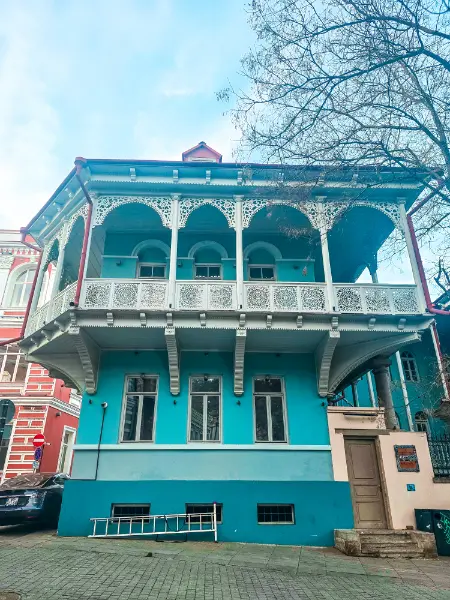
Sololaki is the neighborhood of the old merchant elite. The real “things to do” here aren’t in museums, but behind the heavy wooden doors of residential buildings. Many entryways feature 19th-century hand-painted murals and grand marble staircases. Respect the residents, but don’t be afraid to peek inside places like the Writers’ House of Georgia to see the “Paris of the Caucasus” era. Also save this places in your map 9 Geronti Kikodze St and House of Seylanov brothers.
8. Crossing the Bridge of Peace into Rike Park
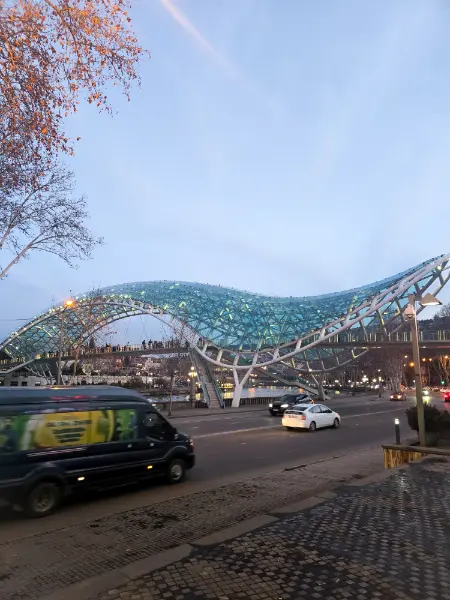
This futuristic glass-and-steel footbridge is controversial among locals, but it’s undeniably iconic. It bridges the gap between the ancient sulfur baths and the ultra-modern Rike Park, symbolizing Georgia’s bridge between its past and its European future.
Fun Fact: When night falls, the bridge comes alive with more than 10,000 LED lights. These lights aren’t just for decoration; they actually send a message of peace in Morse code, communicating the chemical elements found in the human body—reminding us all of our shared humanity across the world.
9. Riding the Funicular to Mtatsminda Park
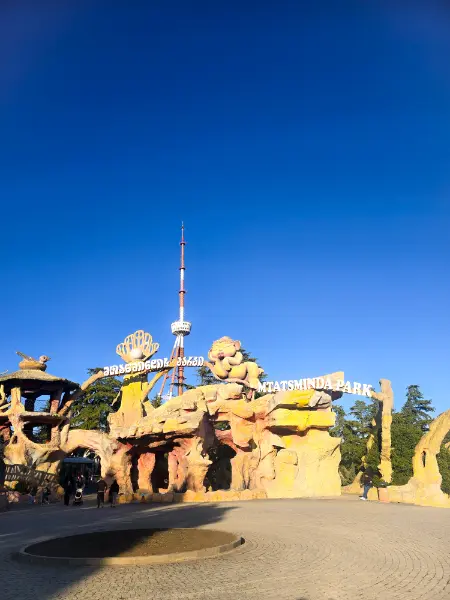
For the highest point in the city, take the 1905 electric funicular up to Mtatsminda Park. It’s a steep, thrilling ride. Once at the top, you can ride the giant Ferris wheel or simply sit at the Funicular Restaurant and eat their famous ponchiki (cream-filled donuts) while looking down at the city lights. It’s a classic local date spot.
The Two-Way System: There are actually two separate cars on the line. You use one to ascend to the amusement park at the top, and the other to return to the city center.
The Card Tip: You cannot use your standard metro card here. You will need to buy a special rechargeable card specifically for the funicular and amusement park rides, which is available at the ticket desk right next to the funicular entrance.
10. The Chronicles of Georgia (The Georgian Stonehenge)
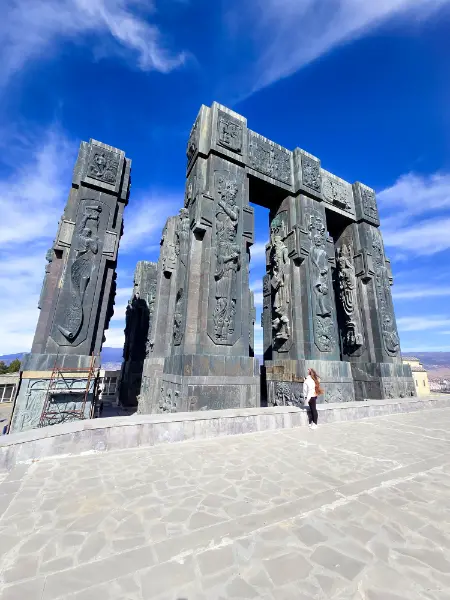
Located slightly outside the center (a 15-minute Bolt ride), this massive bronze monument sits on a hill overlooking the “Tbilisi Sea.” It depicts the history of Georgia and the life of Christ on towering pillars. It is hauntingly beautiful and rarely crowded, making it the perfect spot for photography without the throngs of tourists in the Old Town.
If you have time for day trips from Tbilisi, here you can find out more about them: 3 best day trips from Tbilisi.
A Feast for the Senses: Traditional Georgian Food and Wine
In Georgia, a meal is never just “lunch.” It is a Supra (a feast). Understanding traditional Georgian food and wine is the key to understanding the people. This Tbilisi travel guide will introduce you with local food and wine.
The Wine Philosophy
Georgians have been making wine for 8,000 years, using clay jars called Qvevri buried in the ground. This produces “Amber Wine”—whites that have been fermented with their skins, giving them a bold, tannic structure.
- Where to taste: Head to a small cellar in Sololaki or a specialized wine bar like 8000 Vintages. Don’t just ask for “red” or “white.” Ask for a Saperavi (the king of reds) or a Khikhvi.
The “Big Three” of the Table
- Khinkali: The famous soup dumplings. Remember: hold them by the “handle,” take a small bite, suck out the broth, and never eat the doughy top!
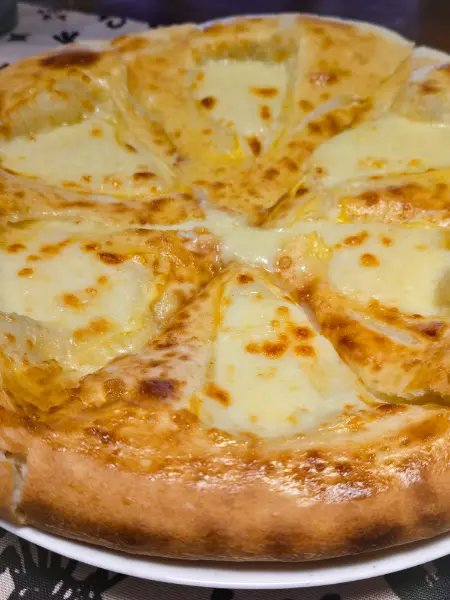
- Khachapuri Adjaruli: The “cheese boat” that comes in many forms. The version with an egg on top is the most famous, but the Imeruli (round and stuffed with cheese) is a local staple.
- Pkhali: Minced vegetables (usually spinach or beets) with walnuts and pomegranate.
Logistics: Budget Travel Tbilisi Costs
One of the reasons I love this city is that you can live like a king on a modest budget. For those tracking budget travel Tbilisi costs, here is the reality in 2026:
- Public Transport: All metro and bus rides cost 1 GEL (0.32 EUR). You just need a “Metromoney” card or your contactless bank card.
- A mid-range dinner for two with wine: Around 100–120 GEL (30–40 EUR).
- Bolt across town: Usually 5–12 GEL (2–4 EUR). It’s so cheap you’ll rarely find yourself wanting to walk the hills!
Expanding Your Horizons: Day Tours from Tbilisi
While there is enough in the city to keep you busy for a week, the real magic happens when you head into the mountains. Using Tbilisi as your base, you can reach the heart of the Caucasus in a few hours. I have already wrote next chapter of this series: 3 best day trips from Tbilisi, where I’ll take you on:
- The Road to the Clouds: My personal guide to the Kazbegi Day Trip, visiting the Gergeti Trinity Church.
- The Stone City: A look into the caves of Uplistsikhe, where people lived in the rocks before the time of Christ.
- Kakheti Wine Tour: Wine and roaming trough the cities all day.
If you are going to Kutaisi first (or after Tbilisi) check my Kutaisi travel guide for all tips you need.
Tbilisi Travel Guide FAQ (2026 Edition)
Is it easy to drive in Tbilisi? Honestly? No. The drivers are bold and the traffic is heavy. If you have a car, keep it at the Mimino Grand and use Bolt or your feet for city exploring. Save the driving for the day trips!
What is the best time of year to visit? May and June are perfect—everything is green and the weather is mild. September and October are the harvest months (Rtveli), which is a magical time for wine lovers.
Do I need an insurance for Georgia? Yes, as of 2026, travel insurance is mandatory for all visitors entering the country. Make sure you have your policy printed or saved on your phone.
See you in the next article.